
A quality camping mattress transforms your outdoor experience by offering comfort and insulation against the ground. It ensures you get a good night’s sleep no matter the conditions of your trip.
In August 2026, we evaluated 6 of the best camping mattress choices to guide you toward options suited to your style of camping. Our analysis considers factors like portability and weather performance for car campers, backpackers, and families alike. For more on sleeping systems, visit our Sleeping Systems guide.

Pros
- Thick 2-inch foam comfort
- Durable washable canvas cover
- Slip-resistant cot attachment
- Easy roll-up with straps
- Versatile for cot or ground
Cons
- Not water resistant
- Bulky when packed
- Too heavy for backpacking
Specifications
| Additional Features | Lightweight |
|---|---|
| Brand Name | TETON Sports |
| Included Components | Camp Pad |
| Target Audience | Adult |
| Model Name | Canvas Camp Pad |
| Number of Items | 1 |
| Unit Count | 1 Count |
| Manufacturer | TETON Sports |
| UPC | 855020001311 |
| Shape | Rectangular |
Verify the current product variation before purchase; specifications may change.
Detailed Review
What stands out in the currently available product data:
- 2 inches of open-cell foam cushions your body for a bed-like sleep on cots or the ground
- Slip-resistant loop system keeps the pad anchored to your cot all night
- Durable 300D polyester canvas shell resists tears and is removable for easy washing
- Roll assister and compression straps make setup and packing quick and compact
- Adds a warm insulation layer beneath your sleeping bag for cold-weather comfort
- Reinforced carry handle makes transport to the campsite simple and secure
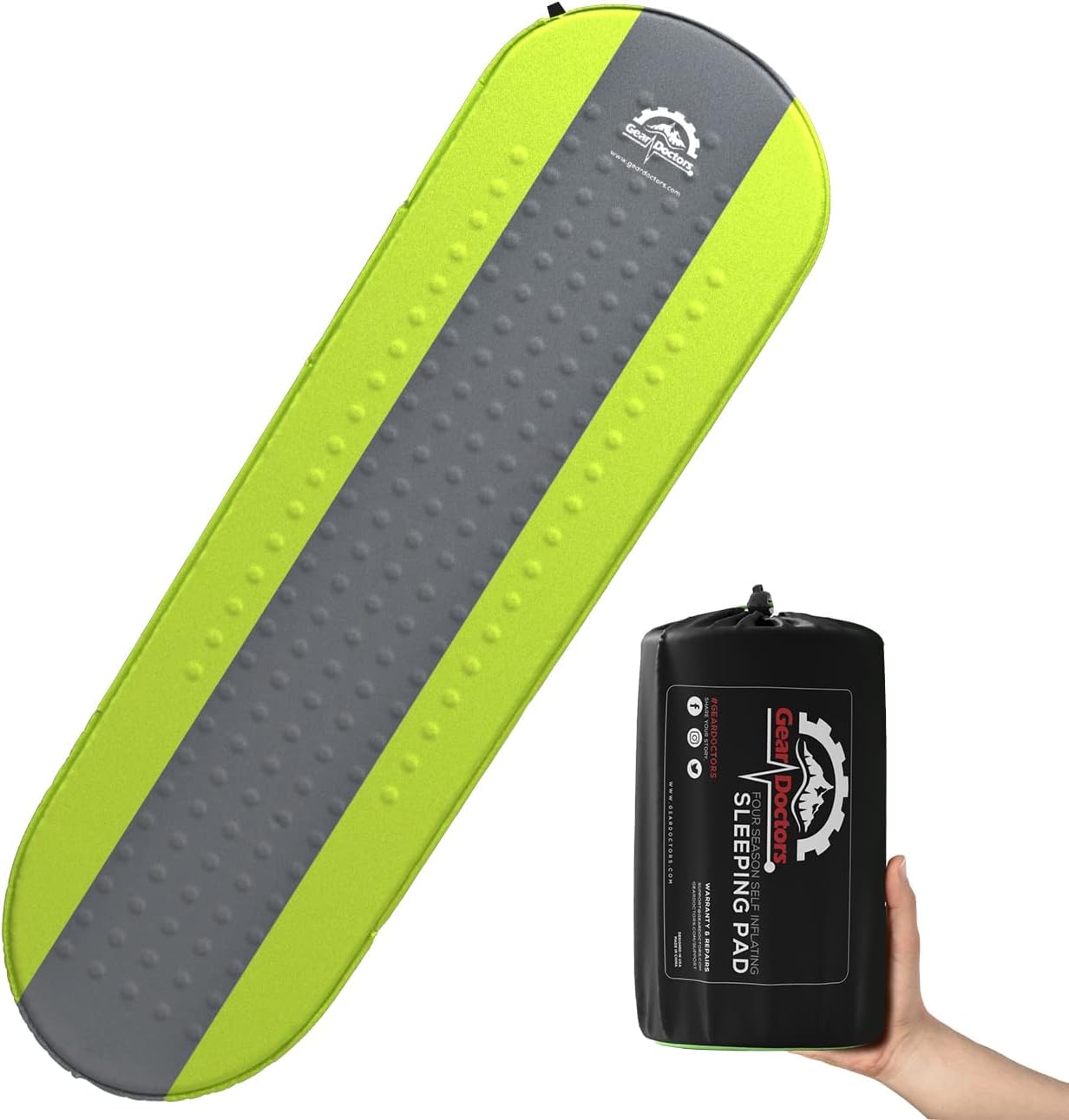
Pros
- Strong R-value for warmth
- Genuine self-inflating foam core
- Comfortable for side sleepers
- Durable water-resistant shell
- Lifetime replacement guarantee
Cons
- Heavier than ultralight air pads
- Self-inflation takes several minutes
- May need breath top-off for firmness
Specifications
| Additional Features | Adjustable, Compact |
|---|---|
| Brand Name | Gear Doctors |
| Included Components | Carry Bag, Repair Patch |
| Target Audience | Adult |
| Model Name | Gear Doctors Oxylus |
| Number of Items | 1 |
| Unit Count | 1 count |
| Manufacturer | Gear Doctors |
| Shape | Rectangular |
| Set Name | Single |
Verify the current product variation before purchase; specifications may change.
Detailed Review
What stands out in the currently available product data:
- 4.3 R-value foam core delivers reliable warmth on cold ground for four-season use
- Open-cell foam self-inflates when unrolled; add a few breaths to dial in firmness
- 72 x 22 x 1.5-inch surface with medium firmness suits side, back, and stomach sleepers
- Packs down to 8 x 12 inches at 35.2 ounces, easy to carry on trails or in a car
- 75D polyester shell resists UV, moisture, and abrasion for years of rugged use
- Hypoallergenic, skin-friendly cover gives a smooth, irritation-free sleep surface
Best For / Avoid If
Best for buyers prioritizing
- Strong R-value for warmth
- Genuine self-inflating foam core
- Comfortable for side sleepers
Consider another option if
- Heavier than ultralight air pads
- Self-inflation takes several minutes
- May need breath top-off for firmness

Pros
- 3-inch memory foam comfort
- Built-in foot pump, no extra gear
- Quiet, insulated for cooler nights
- Non-slip base stays stable
- Easy roll-up with carry bag
Cons
- Heavy at 4.63 pounds
- Not for ultralight backpacking
- Foot pump takes some effort
Specifications
| Brand Name | OGERY |
|---|---|
| Number of Items | 1 |
| Number of Packs | 1 |
| Unit Count | 1 Count |
| Included Components | Sleeping pad |
| Manufacturer | Shenzhen Tute Mei Outdoor Products Co.Ltd. |
| Model Number | T-E04 |
| Manufacturer Part Number | T-E04 |
| Warranty Description | 1 Year Manufacturer |
| Best Sellers Rank | #4,524 in Sports & Outdoors (See Top 100 in Sports & Outdoors) #6 in Foam Sleeping Mats for Camping |
Verify the current product variation before purchase; specifications may change.
Detailed Review
What stands out in the currently available product data:
- 3-inch hybrid foam-and-air core reduces the bouncy feel of air-only pads, easing pressure on shoulders and hips for side sleepers.
- Built-in foot pump inflates the pad in about a minute and lets you fine-tune firmness without mouth blowing or extra equipment.
- Self-inflating foam expands naturally when the valve opens, so setup starts before you even use the pump.
- Abrasion-resistant nylon shell and non-slip base keep the pad stable on tent floors, car trunks, and cots.
- Foam-filled interior dampens movement noise for quieter sleep, while the insulated layer reduces ground heat loss on cold nights.
- Large valve and included carry bag make deflation and rolling compact quick for car camping, RV trips, and guest use.
Best For / Avoid If
Best for buyers prioritizing
- 3-inch memory foam comfort
- Built-in foot pump, no extra gear
- Quiet, insulated for cooler nights
Consider another option if
- Heavy at 4.63 pounds
- Not for ultralight backpacking
- Foot pump takes some effort

Pros
- Ultralight at 1.1 pounds
- Packs down to bottle size
- High 5.2 R-value for four-season use
- Pump sack inflates quickly
- Includes repair kit
Cons
- Not self-inflating, needs pump sack or electric pump
- Some users report crinkling noise
- R-value accuracy questioned by some users
Specifications
| Additional Features | Comes with pump sack(Not Self-Inflating), Compact, Lightweight |
|---|---|
| Brand Name | Gear Doctors |
| Included Components | Carry Bag, Pump, Repair Patch |
| Target Audience | Adult |
| Model Name | Gear Doctors |
| Number of Items | 1 |
| Unit Count | 1 Count |
| Manufacturer | Gear Doctors |
| Shape | Rectangular |
| Set Name | Camping Comfort Air Mattress Bundle |
Verify the current product variation before purchase; specifications may change.
Detailed Review
What stands out in the currently available product data:
- 5.2 R-value insulation keeps you warm through spring, summer, autumn, and cold snaps
- Packs down to 8.5 by 3 inches to fit easily in your pack or clip to the outside
- Inflates in under 2 minutes with the included pump sack, no lung power needed
- 3.2-inch horizontal chambers distribute weight for side, back, and stomach sleeping comfort
- Water-resistant 40D nylon fabric with E-LAST coating adds trail durability
- Includes repair kit and plastic needle to fine-tune airflow and fix punctures on the trail
Best For / Avoid If
Best for buyers prioritizing
- Ultralight at 1.1 pounds
- Packs down to bottle size
- High 5.2 R-value for four-season use
Consider another option if
- Not self-inflating, needs pump sack or electric pump
- Some users report crinkling noise
- R-value accuracy questioned by some users

Pros
- Thick 3.15-inch memory foam
- R-value 9.5 for cold weather
- Built-in pillow saves space
- Self-inflates in 20 seconds
- Supports up to 800 pounds
Cons
- Bulky and heavy when packed
- First inflation takes 20 minutes
- Seam durability issues reported
Specifications
| Additional Features | Built-In Pillow, Dual-use Valve, Hi-tech 26D Foam(Others Only 19D) |
|---|---|
| Brand Name | Elegear |
| Included Components | Carry Bag, Manual, Rubber Bands, Sleeping Pad |
| Target Audience | Adult |
| Model Name | 26D Memory Foam 3.15" Sleeping Pad |
| Number of Items | 1 |
| Unit Count | 1 Count |
| Manufacturer | Elegear |
| Shape | rectangular_prism |
| Set Name | Single Sleeping Pad with Carry Bag |
Verify the current product variation before purchase; specifications may change.
Detailed Review
What stands out in the currently available product data:
- Thick 3.15-inch memory foam isolates you from cold, uneven ground for a full night's rest.
- High-density 26D foam supports up to 800 pounds and stays resilient after repeated compression.
- Self-inflates in about 20 seconds once the valves are open, no pump or mouth inflation needed.
- R-value of 9.5 provides reliable insulation for winter camping and cool nights.
- Built-in pillow and dual-use valves simplify setup and storage without extra gear.
- 50D stretch knit cover is quiet, breathable, and more durable than standard nylon surfaces.
Best For / Avoid If
Best for buyers prioritizing
- Thick 3.15-inch memory foam
- R-value 9.5 for cold weather
- Built-in pillow saves space
Consider another option if
- Bulky and heavy when packed
- First inflation takes 20 minutes
- Seam durability issues reported

Pros
- Fast built-in inflation
- Compact and lightweight
- Comfortable 3-inch thickness
- Integrated pillow
- Connectable for double bed
Cons
- Limited insulation for cold weather
- Narrow for larger side sleepers
- Firm feel may not suit all
Specifications
| Additional Features | Compact |
|---|---|
| Brand Name | FUN PAC |
| Included Components | Pump |
| Target Audience | Adult |
| Model Name | ZW-DRCQD-XJ |
| Number of Items | 1 |
| Unit Count | 1 Count |
| Manufacturer | Yuzonc |
| Manufacturer Warranty Description | 1 year warranty. |
| UPC | 704444255797 |
Verify the current product variation before purchase; specifications may change.
Detailed Review
What stands out in the currently available product data:
- Built-in foot pump inflates the pad in 30-60 seconds, so you skip the extra pump or mouth inflation.
- Integrated pillow saves packing space and keeps your neck supported without an extra accessory.
- 3-inch thick egg-crate air cells cushion hips and shoulders, helping you sleep comfortably on uneven ground.
- Ultralight and packable design, about the size of a water bottle, fits easily in a backpack.
- 40D nylon and TPU construction resists punctures and cleans up easily after muddy trips.
- Side buttons let you connect two pads to create a double-wide sleeping surface for family or friends.
Best For / Avoid If
Best for buyers prioritizing
- Fast built-in inflation
- Compact and lightweight
- Comfortable 3-inch thickness
Consider another option if
- Limited insulation for cold weather
- Narrow for larger side sleepers
- Firm feel may not suit all
Thickness and Support
Thickness is one of the most important factors when selecting a camping mattress. A thicker pad provides better cushioning and insulation from the cold ground. You will notice the difference in comfort during long nights in the tent.
Most options range from 2 to 3 inches in thickness after inflation or setup. Thicker models like the Teton Outfitter XL Sleeping Pad for Cot offer extra comfort for those who prefer a more bed-like feel. However, they may add weight to your pack.
For side sleepers, even support without sinking is key. Look for high-density foam that maintains shape. This trade-off between comfort and weight is significant for your specific trip.
Insulation and R-Value
Insulation helps maintain warmth in cooler weather by reducing heat loss to the ground. The R-value measures this effectiveness, with higher numbers better for cold climates. Choose based on your expected temperatures for August 2026.
Products with R-values around 4 to 9 provide good performance for most seasons. The Gear Doctors® Oxylus 4.3 R-Value Insulated Foam and Gear Doctors® ApolloAir 5.2 R-Value [17oz] excel in this area. Always consider your climate when making a choice.
Some pads include foam layers for added insulation even when not fully inflated. This feature gives flexibility for varying conditions. Test the setup in your environment if possible.
Inflation Method and Setup
Self-inflating pads save time by using foam to draw in air. They are beginner-friendly and ideal for quick setups after a long day. However, they require space to expand fully.
Manual pumps or valves allow precise control over firmness. The OGERY Self-Inflating Sleeping Pad includes a foot pump for easy adjustment. This method is reliable but adds a small step to the process.
Setup time matters for efficiency on busy trips. Models that inflate in under a minute suit fast-paced adventures. Consider your group’s size for shared tasks.
Weight and Packed Size
Lightweight pads are essential for backpacking trips where every ounce counts. The Gear Doctors® ApolloAir 5.2 R-Value [17oz] packs small and is easy to carry. It fits in most backpacks without bulk.
For car camping, some prioritize comfort over minimal weight. The FUN PAC Camping Sleeping Pad is ultralight yet thick when inflated. Balance your needs between ease of transport and support.
Always check the weight listed in specifications. Heavier pads often mean better durability and comfort. This factor affects your total pack weight for the trip.
Durability and Materials
Durable materials resist tears and abrasion from rough terrain. Nylon shells with coatings offer protection against elements. Look for reinforced seams on high-use pads.
The Elegear Self Inflating Sleeping Pad with Pillow features strong fabrics for long-lasting performance. Many include repair kits for quick fixes. Choose brands known for warranty support.
Seasonal use also matters. Pads built for year-round camping handle varied conditions well. Check for UV and water resistance ratings in the description.
Valves and Repairability
Easy-to-use valves prevent air leaks and allow quick inflation. Dual-valve designs on some models offer extra security. This feature is crucial for peace of mind during trips.
Included repair kits are a bonus for unexpected punctures. The Gear Doctors models provide these for added reliability. Always test the valve before heading out.
Portable storage with carry bags keeps the pad organized. Compact designs minimize space in your vehicle or tent. This practicality supports hassle-free packing.
Price and Overall Value
Value comes from balancing features like insulation and portability. Higher priced options often deliver premium comfort. Compare based on your budget and trip requirements.
Consider the number of seasons each pad will serve. Durable models save money over time by reducing replacements. Look for field repairability as a key advantage.
Read manufacturer descriptions for specific trade-offs. These insights help match the pad to your exact needs and preferences.
How We Researched These Products
We base our reviews on detailed analysis of manufacturer data and real-world use cases from outdoor enthusiasts. Our focus remains on verifiable facts about each product.
Transparency is key in our methodology. We highlight trade-offs and do not make unverified claims about performance.
Final Thoughts
The Gear Doctors® Oxylus 4.3 R-Value Insulated Foam is our top pick for most campers. Its versatile design suits various trip types and climates effectively.
For budget-conscious buyers, the FUN PAC Camping Sleeping Pad provides strong value without sacrificing too much comfort. It works well for shorter trips or casual use.
The Gear Doctors® ApolloAir 5.2 R-Value [17oz] shines for backpackers seeking ultralight options. Its compact size and solid insulation make it a favorite for hiking adventures.
For those needing extra pillow support, the Elegear Self Inflating Sleeping Pad with Pillow stands out. Check our Sleeping Systems category for more.
FAQs
What is the best camping mattress for backpacking?
For backpacking, prioritize lightweight models with high insulation. The Gear Doctors® ApolloAir 5.2 R-Value [17oz] is a strong choice due to its compact packed size. It balances comfort and portability well.
How does R-value affect sleeping pads?
The R-value indicates the pad’s ability to insulate against cold ground. Higher values suit colder climates and longer nights. Lower R-values work for warmer conditions to avoid overheating.
Self-inflating vs non-inflating camping mattresses
Self-inflating options are convenient but need room to expand. Non-inflating may require a separate pump. Your choice depends on setup time and space available.
What thickness is ideal for a camping mattress?
2 to 3 inches offers a good balance for most users. Thicker pads provide more comfort but weigh more. Test for your preferred firmness level.
Do camping mattresses come with pillows?
Yes, some models include built-in pillows like the FUN PAC Camping Sleeping Pad and Elegear Self Inflating Sleeping Pad with Pillow. This feature saves space and adds convenience for your trip.
How do I store a camping mattress?
Use the included carry bag for compact storage. Roll or fold according to instructions after deflation. Proper storage prevents damage during transport.
What to consider for winter camping with a mattress?
Choose high R-value pads for cold weather to maintain warmth. Ensure the pad is durable against potential moisture. Layering with a sleeping bag enhances performance.
Are all camping mattresses equally durable?
No, durability varies by materials and construction. Look for reinforced options with warranties. Regular care extends the life of any pad.
How do I choose a best camping mattress for family camping?
Focus on thick, supportive pads that fit multiple people. Models like the Teton Outfitter XL Sleeping Pad for Cot work well for family trips. Check for ease of setup and stability.
What are common mistakes when buying a camping mattress?
Overlooking the packed size or ignoring climate needs are common errors. Always match the pad to your trip type and weather. Reading reviews helps identify issues before purchase.
Selecting the right best camping mattress ensures a comfortable and warm sleep on your camping trip. It protects you from the cold ground and helps you wake up refreshed.