Car campers powering a 12-volt fridge and camera batteries need more than a high wattage label. Battery capacity, fridge startup draw, charging ports, and recharge options determine how useful a station will be between drives.
This guide compares four LiFePO4 stations using supplied specifications, with attention to real trip constraints rather than broad popularity. For more ways to plan off-grid charging, see our portable solar panel guide.
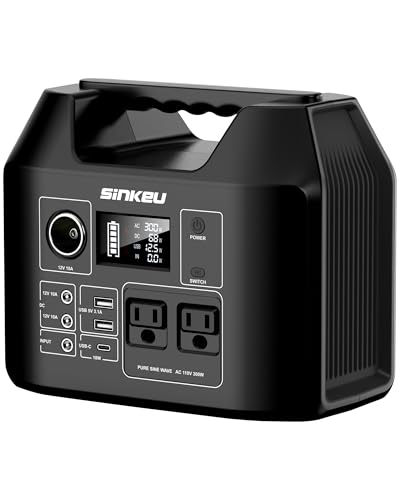
Pros
- 256Wh capacity
- 6.5-pound listed weight
- Two AC outlets
- AC, car, and solar charging
- Built-in camping light
Cons
- 300W maximum output
- 256Wh limits runtime for larger loads
- Solar panel not included in listed package
Specifications
| Color | Black |
|---|---|
| Size | 300W |
| Dimensions | 7.48 x 5.51 x 9.05 inches |
| Weight | 6.5 pounds |
| Product Group | Lawn & Patio |
Verify the current product variation before purchase; specifications may change.
Detailed Review
What stands out in the currently available product data:
- 256Wh capacity supports phones, cameras, lights, and other small devices
- Two 120V pure sine wave AC outlets power compatible equipment under 300W
- USB-A, USB-C, and DC outputs allow charging several device types
- 6.5-pound weight and compact dimensions ease car-camping transport
- Recharge from a wall outlet, car outlet, or compatible solar panel
- Built-in light provides a nearby lighting option at camp
Best For / Avoid If
Best for buyers prioritizing
- 256Wh capacity
- 6.5-pound listed weight
- Two AC outlets
Consider another option if
- 300W maximum output
- 256Wh limits runtime for larger loads
- Solar panel not included in listed package

Pros
- Compact and lightweight
- Long-lasting LiFePO4 battery
- Quiet and fanless operation
- Fast 1.5-hour recharge
- Multiple port options
Cons
- Limited to 100W total output
- Solar panel not included
- AC shuts off at 9% battery
Specifications
| Connector Type | 2 Prong AC Outlet, 3 Prong AC Outlet, Lightweight, Portable, Super Quiet, USB Port |
|---|---|
| Battery Capacity | 4 milliamp_hours |
| Other Special Features of the Product | Digital Display, LiFePO4 Batteries Power Station, Portable, Super Quiet |
| Voltage | 120 volts |
| Power Source | Battery Powered |
| Number of Ports | 7 |
| Rapid Charging Performance | 100% in 1.2 Hours |
| Battery Charge Time | 1.2 hours |
| Compatible Devices | Laptops with USB-C, PD Charging, Compatible, E-Readers & Smart Devices, Bluetooth Speakers & Headphones |
| Compatible Cellular Phone Models | Apple iPhone 15 Pro Max, Apple iPhone 17, Apple iPhone 17 Pro, Samsung Galaxy Fold, Samsung Galaxy S25, Samsung Galaxy S25 Ultra |
Verify the current product variation before purchase; specifications may change.
Detailed Review
What stands out in the currently available product data:
- Pocket-sized at 6.5 x 3.3 x 4 inches and 2.54 lbs, fits easily in a backpack or glove compartment
- 7 output ports including 2 AC, 2 USB-C (45W/15W), 2 USB-A, and DC for versatile device charging
- LiFePO4 battery with 3500+ cycles lasts 3x longer than standard lithium, ensuring long-term reliability
- Ultra-fast 0-80% charge in 1.5 hours via AC, USB-C, car, or solar (panel sold separately)
- Quiet fanless operation and built-in 4-level LED flashlight with SOS mode for emergency readiness
- AC auto-shutoff at 9% battery prevents over-discharge, with remaining DC/USB power usable
Best For / Avoid If
Best for buyers prioritizing
- Compact and lightweight
- Long-lasting LiFePO4 battery
- Quiet and fanless operation
Consider another option if
- Limited to 100W total output
- Solar panel not included
- AC shuts off at 9% battery

Specifications
| Color | Grey |
|---|---|
| Dimensions | 8.66 x 7.09 x 5.12 inches |
| Weight | 5.73 Pounds |
| Product Group | Lawn & Patio |
| Binding | Tools & Home Improvement |
Verify the current product variation before purchase; specifications may change.
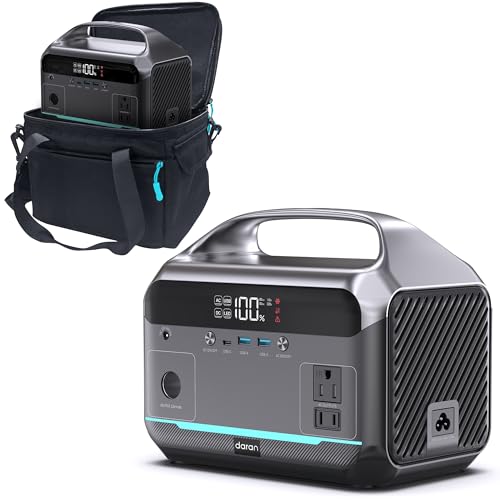
Pros
- 288Wh LiFePO4 battery
- 350W rated output
- 8.2-pound weight
- Wall, car, and solar charging options
- Built-in rear light with SOS mode
Cons
- 350W output limits appliance choices
- Solar panels and car charging cables sold separately
- Requires periodic charging during long-term storage
Specifications
| Color | Dark Grey |
|---|---|
| Dimensions | 10 x 6.6 x 8.2 Inches |
| Weight | 8.2 pounds |
| Product Group | Wireless |
Verify the current product variation before purchase; specifications may change.
Detailed Review
What stands out in the currently available product data:
- 288Wh LiFePO4 battery provides portable power for short trips and limited backup needs.
- 350W rated output supports compatible devices within its power limit.
- Two AC outlets, USB-C, USB-A, and DC output allow multiple device connections.
- Recharge by wall outlet, 12V car port, or optional solar panel.
- 8.2-pound weight and compact dimensions ease transport and storage.
- LCD display and rear light with steady, strobe, and SOS modes add practical campsite features.
Best For / Avoid If
Best for buyers prioritizing
- 288Wh LiFePO4 battery
- 350W rated output
- 8.2-pound weight
Consider another option if
- 350W output limits appliance choices
- Solar panels and car charging cables sold separately
- Requires periodic charging during long-term storage
1. Estimate energy use, not just appliance wattage
Wattage describes power draw at a moment; watt-hours describe stored energy. A fridge cycles on and off, so its daily use depends on ambient temperature, set point, ventilation, food temperature, and how often its lid opens.
Check the fridge label or manual for input and estimate its duty cycle from manufacturer guidance or your own power meter. Then add camera battery charging, phones, and conversion losses; usable output will be lower than the station’s rated capacity.
2. Match capacity to trip length and recharge access
Listed capacities range from 89.6Wh to 288Wh, a meaningful spread for a fridge that must run overnight or longer. None of these figures guarantees a particular runtime because fridge consumption and inverter losses vary by setup.
For a short car-camping trip with daily driving, smaller capacity may work if the station can recharge in the vehicle. For extended stays, add a compatible solar panel or choose a larger battery, then allow for cloudy weather and charging time.
3. Confirm output type, rated watts, and startup demand
Check whether your fridge accepts 12V DC, AC, or both, and use the compatible connection when possible. AC operation runs through an inverter and can consume more energy than direct DC output.
The supplied data lists 100W for the compact DARAN station, 300W for the SinKeu and DaranEner 192Wh models, and 350W for the larger DARAN unit. Compare those continuous ratings with the fridge’s requirements, and verify startup surge needs before purchase.
4. Plan camera charging around port limits
Camera batteries often charge through USB, USB-C, or a dedicated charger that plugs into AC. The DARAN 288Wh model lists a 60W USB-C PD port, while the DaranEner 192Wh station lists 60W USB-C PD.
Confirm charger compatibility and required voltage before relying on USB-C. If your camera charger requires AC, account for inverter use and avoid assuming that multiple ports can each deliver their maximum output simultaneously.
5. Balance capacity against carry weight
Station weight matters less in a vehicle than on a long walk from a parking area. The supplied figures list the DaranEner 192Wh at 5.73 pounds, the SinKeu 256Wh at 6.5 pounds, and the DARAN 288Wh at 8.2 pounds.
The 89.6Wh DARAN weighs 2.54 pounds, but its 100W output and lower capacity limit its role with a fridge. Choose around how far you must carry gear, not a general claim that the lightest station suits every camp.
6. Check recharge methods and storage care
AC, vehicle, and solar charging are listed across the models, but included cables and input limits differ. The DaranEner 192Wh supports up to 60W DC solar input; the DARAN 288Wh listing says solar panels and car cables are sold separately.
Read each manual for charging compatibility, temperature limits, and storage intervals. Product descriptions advise periodic recharging, but intervals differ, so follow the manual for the exact model rather than applying one schedule to every station.
7. Treat safety features as safeguards, not guarantees
LiFePO4 chemistry and a battery management system do not remove the need for careful use. Keep the station dry, ventilated, and away from heat, and inspect cables and connectors before each trip.
Do not charge or operate equipment beyond the manufacturer’s limits. A station is not a substitute for safe food handling; use a thermometer and follow food-safety guidance if refrigeration fails.
Why You Should Trust Us
We compared the supplied product specifications for capacity, rated output, ports, weight, and recharge options. We did not physically test these stations, verify manufacturer claims independently, or measure fridge runtime.
That evidence supports a feature-based comparison, not a guaranteed performance ranking. Confirm the current manual and your appliance requirements before buying, especially when fridge startup power or charging compatibility is unclear.
Final Thoughts
For car campers needing the strongest listed capacity among these options, the DARAN Portable Power Station offers 288Wh, 350W rated output, and 8.2-pound listed weight. It is our overall fit when greater stored energy matters more than minimizing carry weight, but its actual fridge runtime remains setup-dependent.
The DaranEner Portable Power Station stands out as a value-oriented middle option, with 192Wh, 300W output, and 5.73-pound listed weight. Choose the SinKeu 300W Portable Power Station 80000mAh LiFePO4 when its listed 256Wh capacity and 6.5-pound weight suit your load; verify its charging ports against your camera and fridge connectors.
The small DARAN Portable Power Station 89.6Wh LiFePO4 is better suited to camera batteries and personal electronics than extended fridge support. For a larger system or broader capacity comparison, consult our portable power station guide and the coolers and refrigeration category.
FAQs
Can a portable power station run a camping fridge overnight?
Possibly, but runtime depends on the fridge’s energy use, ambient temperature, settings, and station capacity. Use the fridge’s documented consumption and treat rated watt-hours as a starting point, not a runtime promise.
Is 300W enough for a 12V camping fridge?
It may be, if the fridge’s continuous and startup requirements fit the station’s output. Check the appliance manual and confirm whether you will use its DC input or an AC adapter.
Should I power a fridge through AC or DC?
Use a compatible DC connection when the fridge supports it, since AC conversion can add energy loss. Follow the fridge and station manuals, and do not substitute an incompatible cable.
Can one power station run a fridge and charge camera batteries?
That depends on combined demand, available ports, and total energy use. Check each device’s input requirements and avoid assuming all ports deliver their maximum output simultaneously.
Is 89.6Wh enough for a fridge and camera batteries?
It is a limited reserve for refrigeration and is a stronger fit for camera batteries and smaller electronics. The listed DARAN model also has a 100W output limit, which may exclude some appliances.
Can solar panels recharge these power stations while camping?
Solar charging is listed, but supported input limits, cables, and panel compatibility vary. Confirm specifications in the manual and plan for reduced charging in shade, clouds, or poor panel orientation.
What is the best LiFePO4 portable power station for a fridge and camera batteries?
There is no universal pick without knowing fridge consumption, trip length, and carry needs. The 288Wh DARAN offers the highest listed capacity here; lighter or smaller models may suit shorter trips and camera charging better.
How should I store a LiFePO4 power station between trips?
Follow the model’s manual for charge level, storage temperature, and recharge interval. The supplied descriptions recommend periodic charging, but their stated maintenance intervals are not identical.