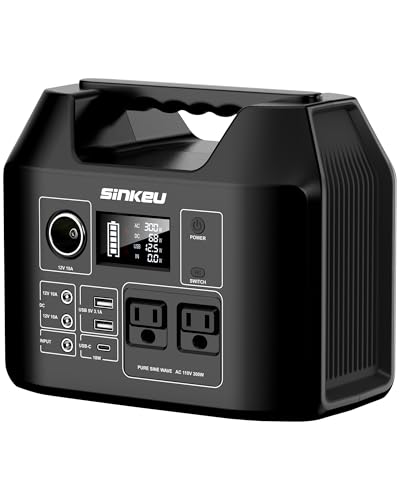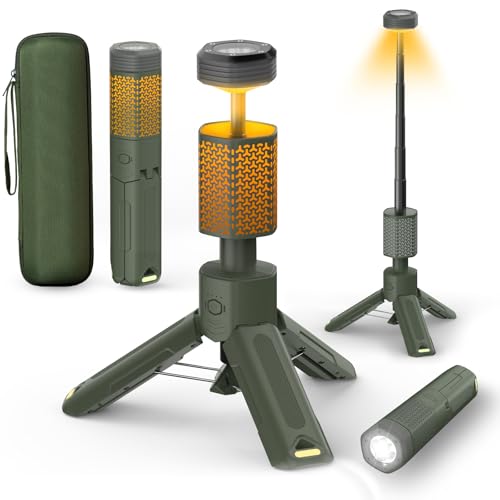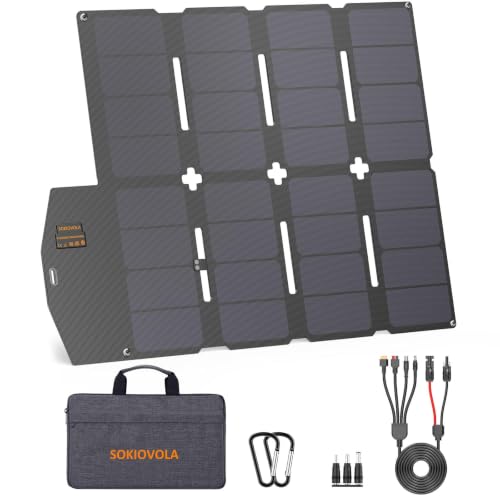

Remote work from a camper van can mean charging a laptop, phone, hotspot, and small accessories far from shore power. The right LiFePO4 portable power station depends on your devices, work hours, driving schedule, and access to solar or wall charging.
These four options span 89.6Wh to 512Wh, but battery capacity alone does not determine useful runtime. Our guide focuses on output limits, recharge planning, portability, and the tradeoffs that matter for a mobile work setup.
For a broader look at capacity and output, see our portable power station capacity and camping guide.
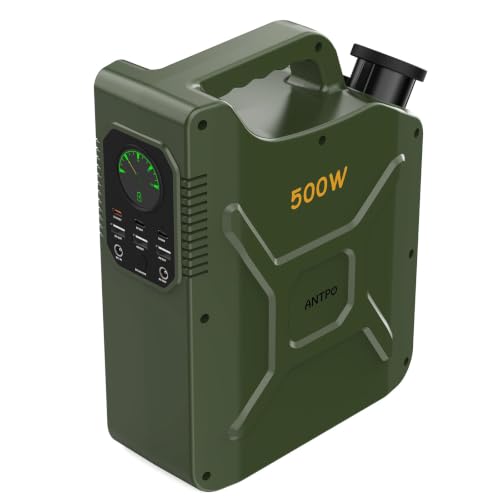
Pros
- 512Wh LiFePO4 battery
- 500W pure sine wave output
- Three recharge methods
- CPAP-compatible output claim
- Portable 13.2-pound design
Cons
- Limited for high-wattage appliances
- Solar recharge depends on panel conditions
- Runtime varies by device load
Specifications
| Dimensions | 6 x 5 x 5 inches |
|---|---|
| Product Group | Home Improvement |
Verify the current product variation before purchase; specifications may change.
Detailed Review
What stands out in the currently available product data:
- 500W continuous output supports laptops, lights, chargers, and selected small appliances
- Pure sine wave AC power suits sensitive electronics and compatible CPAP equipment
- LiFePO4 battery chemistry supports longer cycle life than typical lithium-ion cells
- AC, solar, and 12V car charging support campsite and emergency use
- LCD shows battery level, output wattage, and estimated runtime
- 13.2-pound body and integrated handle simplify vehicle-based transport
Best For / Avoid If
Best for buyers prioritizing
- 512Wh LiFePO4 battery
- 500W pure sine wave output
- Three recharge methods
Consider another option if
- Limited for high-wattage appliances
- Solar recharge depends on panel conditions
- Runtime varies by device load

Pros
- Compact and lightweight
- Long-lasting LiFePO4 battery
- Quiet and fanless operation
- Fast 1.5-hour recharge
- Multiple port options
Cons
- Limited to 100W total output
- Solar panel not included
- AC shuts off at 9% battery
Specifications
| Connector Type | 2 Prong AC Outlet, 3 Prong AC Outlet, Lightweight, Portable, Super Quiet, USB Port |
|---|---|
| Battery Capacity | 4 milliamp_hours |
| Other Special Features of the Product | Digital Display, LiFePO4 Batteries Power Station, Portable, Super Quiet |
| Voltage | 120 volts |
| Power Source | Battery Powered |
| Number of Ports | 7 |
| Rapid Charging Performance | 100% in 1.2 Hours |
| Battery Charge Time | 1.2 hours |
| Compatible Devices | Laptops with USB-C, PD Charging, Compatible, E-Readers & Smart Devices, Bluetooth Speakers & Headphones |
| Compatible Cellular Phone Models | Apple iPhone 15 Pro Max, Apple iPhone 17, Apple iPhone 17 Pro, Samsung Galaxy Fold, Samsung Galaxy S25, Samsung Galaxy S25 Ultra |
Verify the current product variation before purchase; specifications may change.
Detailed Review
What stands out in the currently available product data:
- Pocket-sized at 6.5 x 3.3 x 4 inches and 2.54 lbs, fits easily in a backpack or glove compartment
- 7 output ports including 2 AC, 2 USB-C (45W/15W), 2 USB-A, and DC for versatile device charging
- LiFePO4 battery with 3500+ cycles lasts 3x longer than standard lithium, ensuring long-term reliability
- Ultra-fast 0-80% charge in 1.5 hours via AC, USB-C, car, or solar (panel sold separately)
- Quiet fanless operation and built-in 4-level LED flashlight with SOS mode for emergency readiness
- AC auto-shutoff at 9% battery prevents over-discharge, with remaining DC/USB power usable
Best For / Avoid If
Best for buyers prioritizing
- Compact and lightweight
- Long-lasting LiFePO4 battery
- Quiet and fanless operation
Consider another option if
- Limited to 100W total output
- Solar panel not included
- AC shuts off at 9% battery

Specifications
| Color | Grey |
|---|---|
| Dimensions | 8.66 x 7.09 x 5.12 inches |
| Weight | 5.73 Pounds |
| Product Group | Lawn & Patio |
| Binding | Tools & Home Improvement |
Verify the current product variation before purchase; specifications may change.
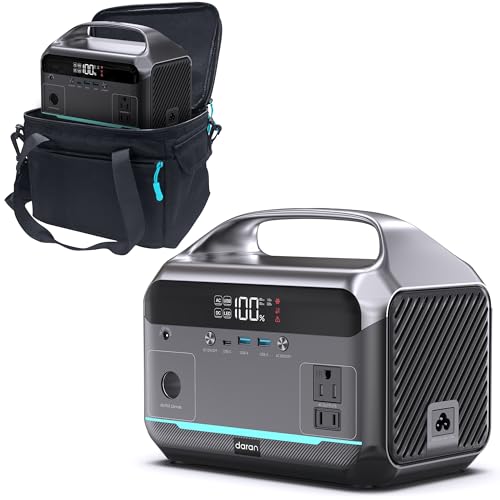
Pros
- 288Wh LiFePO4 battery
- 350W rated output
- 8.2-pound weight
- Wall, car, and solar charging options
- Built-in rear light with SOS mode
Cons
- 350W output limits appliance choices
- Solar panels and car charging cables sold separately
- Requires periodic charging during long-term storage
Specifications
| Color | Dark Grey |
|---|---|
| Dimensions | 10 x 6.6 x 8.2 Inches |
| Weight | 8.2 pounds |
| Product Group | Wireless |
Verify the current product variation before purchase; specifications may change.
Detailed Review
What stands out in the currently available product data:
- 288Wh LiFePO4 battery provides portable power for short trips and limited backup needs.
- 350W rated output supports compatible devices within its power limit.
- Two AC outlets, USB-C, USB-A, and DC output allow multiple device connections.
- Recharge by wall outlet, 12V car port, or optional solar panel.
- 8.2-pound weight and compact dimensions ease transport and storage.
- LCD display and rear light with steady, strobe, and SOS modes add practical campsite features.
Best For / Avoid If
Best for buyers prioritizing
- 288Wh LiFePO4 battery
- 350W rated output
- 8.2-pound weight
Consider another option if
- 350W output limits appliance choices
- Solar panels and car charging cables sold separately
- Requires periodic charging during long-term storage
Start with your daily energy use
List each device, its wattage, and the hours you expect to use it between recharges. Multiply watts by hours for a rough watt-hour estimate; a 45W laptop used for four hours draws about 180Wh before conversion losses.
Actual consumption varies with workload, charging behavior, and power-station conversion efficiency. Treat capacity as a planning ceiling, not a promise of runtime, and leave reserve for phone, hotspot, and lighting needs.
Match output to laptop and accessories
Check the laptop’s charger label and the station’s port ratings. USB-C Power Delivery can avoid inverter losses when its voltage and wattage support your computer, while an AC outlet may be necessary for other chargers.
The 89.6Wh DARAN model lists a 45W USB-C port and 100W total output. That may suit modest charging needs, but a laptop needing more than 45W could charge slowly or fail to charge under heavy use.
The DaranEner 192Wh station lists 60W USB-C PD and 300W AC output. The DARAN 288Wh model lists 60W USB-C PD and 350W rated output, while the ANTPO model lists a 500W continuous inverter and 60W PD.
Choose capacity for work sessions, not headline numbers
Among these options, 89.6Wh prioritizes compact size, while 192Wh and 288Wh offer more stored energy for longer sessions or several smaller devices. The ANTPO listing gives 512Wh, the largest stated capacity in this group.
Higher capacity can reduce how often you recharge, but usually means carrying a larger battery. For a van, compare the extra reserve against storage space and whether your driving or solar routine can replenish it.
Plan recharging around your route
Wall charging is practical before departure or at a powered campsite. Vehicle charging can help during drives, but confirm which cable is included; the product details say car cables are sold separately for some models.
Solar can extend off-grid use, but panel compatibility, input limits, weather, shade, and available daylight affect replenishment. The DaranEner 192Wh model lists a maximum 60W DC solar input; the ANTPO listing describes compatibility with a 200W panel.
Do not assume a panel’s rated wattage equals the station’s charging rate. Check input voltage, connector, and maximum input in the manual before buying, and use our portable solar panel guide when planning a compatible setup.
Consider weight and where the station will live
The listed weights range from 2.54 pounds for the 89.6Wh unit to 13.2 pounds for the ANTPO 512Wh model. For a station that stays inside a van, weight may matter less than secure storage and access to outlets.
For frequent transfers between a vehicle, desk, and campsite, lighter equipment is easier to handle. Keep the station secured during travel, protect ports from moisture and dust, and follow its manual for ventilation and temperature limits.
Read limits, warranties, and maintenance guidance
LiFePO4 chemistry and built-in battery management systems are listed across these products, but advertised cycle counts and lifespan claims are manufacturer statements, not guarantees. Warranty details also vary, so check current documentation and exclusions before relying on long-term support.
Some supplied product details recommend two initial charge-discharge cycles and periodic recharging during storage. Follow the model’s own manual rather than treating listing instructions as universal, and avoid using a station beyond its rated output.
First-time buyers can often skip extra AC outlets, decorative lights, and peak-power figures that do not match their devices. Focus instead on battery capacity, the USB-C rating, compatible recharge methods, and clear warranty terms.
Why You Should Trust Us
We based this comparison on supplied product specifications and descriptions, including stated capacity, output ratings, weight, charging options, and included accessories. We did not physically test these stations, independently verify manufacturer claims, or measure real-world laptop runtime.
Where the supplied details omit a specification, we avoid filling the gap with an estimate. Before purchase, confirm exact port behavior, charging compatibility, manual instructions, warranty coverage, and current product documentation for your intended devices.
Final Thoughts
The ANTPO 500W Portable Power Station is the strongest capacity choice in this group based on its listed 512Wh battery, 500W continuous inverter, and 60W PD port. It may fit van workers who need greater reserve, but its 13.2-pound weight and 60W USB-C limit still matter.
The DaranEner Portable Power Station is a practical value-oriented middle option on paper: 192Wh capacity, 300W AC output, 60W USB-C PD, and listed weight of 5.73 pounds. For more stored energy and 350W rated output, the DARAN Portable Power Station lists 288Wh, though it weighs 8.2 pounds.
For a light, quiet setup focused on smaller devices, the DARAN Portable Power Station 89.6Wh lists fanless operation and weighs 2.54 pounds, but its 100W total output and small capacity constrain laptop use. Compare longer-duration options in our portable power station guide, and plan separate campsite lighting with our camping headlamp recommendations.
FAQs
What capacity do I need for remote work in a camper van?
Estimate daily watt-hours from your devices and work hours, then allow reserve for conversion losses and other electronics. Choose capacity based on time between reliable recharges, not a single advertised runtime claim.
Can a portable power station charge a laptop?
Usually, if the station’s USB-C PD or AC output supports the laptop charger’s requirements. Check both wattage and charging compatibility; a port with insufficient output may charge slowly or not keep up during demanding work.
Is an 89.6Wh power station enough for a workday?
It may cover limited charging for a low-consumption laptop or smaller devices, but it is not a dependable assumption for a full workday. The DARAN 89.6Wh model also lists 100W total output, so check device demand as well as capacity.
Should I use USB-C or an AC outlet for my laptop?
Use compatible USB-C PD when its voltage and wattage meet the laptop’s requirements. AC may be needed for a proprietary charger, but inverter use can consume more energy than direct DC charging.
Can solar keep a camper van power station charged?
Solar can contribute when panel output and station input are compatible, but shade, weather, daylight, and orientation affect charging. Confirm connector and input limits in the manual before connecting a panel.
Can these stations run a refrigerator or other appliance?
Check both continuous wattage and startup surge against the appliance requirements. Capacity determines how long energy may be available; it does not allow a station to exceed its rated output.
Are LiFePO4 power stations maintenance-free?
No battery should be treated as maintenance-free. Follow the model manual for storage charge, temperature, ventilation, and inspection guidance, and use only compatible charging equipment.
Which power station is easiest to carry between work spots?
Based on supplied weights, the 2.54-pound DARAN 89.6Wh model is lightest, while offering the least listed capacity. Compare carry weight with the runtime you need; our portable solar panel guide can also help you plan a recharge setup.
What should I verify before buying a station for remote work?
Confirm laptop input needs, usable ports, battery capacity, recharge compatibility, included cables, weight, and warranty terms. Read the current manual and product documentation, since supplied descriptions may omit details that affect your setup.