
A camp fridge draws power over time, while camera batteries need reliable charging between shoots. Choosing the best LiFePO4 portable power station for a fridge and camera batteries under $500 means checking capacity, inverter limits, recharge options, and the fridge’s actual energy use.
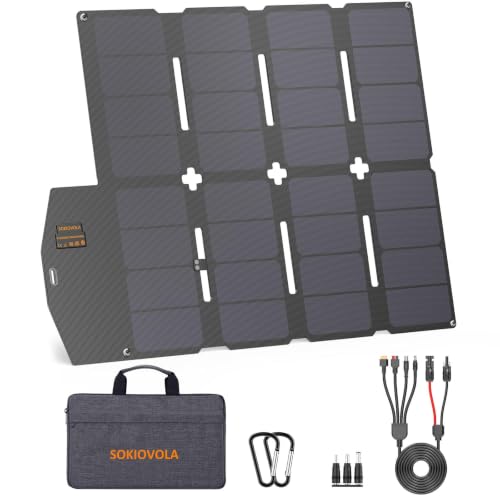
These three models list LiFePO4 batteries, but differ in capacity, output, weight, charging claims, and warranty details. For more context on pairing panels with a station, see our portable solar panel guide.

Pros
- 1024Wh LFP battery capacity
- Dual 140W USB-C ports
- Claimed 37-minute recharge to 80%
- Listed 10ms UPS switchover
- Listed five-year warranty
Cons
- Roughly 33 pounds limits carry distance
- Solar and car charging require separate adapters
- AC output wattage absent from published specifications
Detailed Review
What stands out in the currently available product data:
- DJI claims 80% recharge in 37 minutes, useful for short stops with AC power; charging conditions affect results
- Dual 140W USB-C ports offer 280W combined output for compatible laptops and devices; actual charging depends on device and cable support
- DJI reports noise as low as 26 dB under specified conditions; operating noise can vary with load and charging
- Listed 10ms UPS switchover supports backup use; verify connected equipment tolerates that interruption
- SDC fast charging supports select DJI drone batteries, useful for filming trips; confirm battery compatibility and required accessories
- 1024Wh LFP battery provides substantial stored energy for camp electronics; usable runtime depends on load and conversion losses
Best For / Avoid If
Best for buyers prioritizing
- 1024Wh LFP battery capacity
- Dual 140W USB-C ports
- Claimed 37-minute recharge to 80%
Consider another option if
- Roughly 33 pounds limits carry distance
- Solar and car charging require separate adapters
- AC output wattage absent from published specifications

Pros
- 999Wh LiFePO4 battery
- 1000W continuous, 2000W peak output
- Pure sine wave AC outlets
- 800W MPPT solar charging
- 24-month warranty
Cons
- AC recharge takes 8 to 12 hours
- 17-pound carry weight
- Solar panels sold separately
Specifications
| Color | Olive |
|---|---|
| Dimensions | 15 x 10 x 10 Inches |
| Product Group | Lawn & Patio |
Verify the current product variation before purchase; specifications may change.
Detailed Review
What stands out in the currently available product data:
- 999Wh capacity supports phones, laptops, lights, CPAP devices, and mini-fridges
- 1000W continuous output handles common camping and backup equipment
- Pure sine wave AC power suits sensitive electronics
- Ten output options let groups charge devices simultaneously
- 800W MPPT solar input supports off-grid recharging
- LiFePO4 battery targets 2000-plus charge cycles
Best For / Avoid If
Best for buyers prioritizing
- 999Wh LiFePO4 battery
- 1000W continuous, 2000W peak output
- Pure sine wave AC outlets
Consider another option if
- AC recharge takes 8 to 12 hours
- 17-pound carry weight
- Solar panels sold separately

Pros
- 1024Wh listed capacity
- 1800W listed AC output
- 140W USB-C PD charging
- Four charging methods
- LiFePO4 battery chemistry
Cons
- 25.57-pound weight limits backpacking use
- Solar panel not listed among included accessories
- Weather-resistance rating not supplied
Specifications
| Color | Nomad1800-A |
|---|---|
| Dimensions | 13.77 x 8.66 x 10.35 inches |
| Weight | 25.57 pounds |
| Product Group | Lawn & Patio |
| Binding | Tools & Home Improvement |
Verify the current product variation before purchase; specifications may change.
Detailed Review
What stands out in the currently available product data:
- 1024Wh listed capacity supports campsite electronics and backup essentials; runtime depends on device load and conversion losses
- 1800W listed AC output accommodates compatible appliances across four outlets; connected loads must stay within total output limits
- Manufacturer claims 0-80% charging in 55 minutes through AC, or 35 minutes with AC plus solar, useful between trips
- AC, solar, and car charging offer flexible replenishment; supplied box list includes solar connection cable, not solar panel
- 140W USB-C PD port supports compatible laptop charging without occupying AC outlets
- LiFePO4 battery carries manufacturer claims of 4000-plus cycles and 10-year lifespan; actual longevity depends on use and storage
Best For / Avoid If
Best for buyers prioritizing
- 1024Wh listed capacity
- 1800W listed AC output
- 140W USB-C PD charging
Consider another option if
- 25.57-pound weight limits backpacking use
- Solar panel not listed among included accessories
- Weather-resistance rating not supplied
Capacity and fridge runtime
The DJI and AFERIY each list 1,024Wh capacity; GRECELL lists 999Wh. That small listed difference is unlikely to decide a purchase by itself, because a fridge’s cycling, ambient temperature, settings, and opening frequency affect daily energy use.
Estimate energy from the fridge’s published watt-hours per day, then reserve capacity for camera charging, phones, and conversion losses. AC runtime will be lower than a simple capacity calculation suggests, and product data does not provide a verified runtime for any particular fridge.
Continuous output and startup demand
GRECELL specifies 1,000W continuous output and 2,000W peak. AFERIY lists 1,800W AC output, while the supplied DJI information does not state its continuous AC wattage, so confirm its rating before matching it with a compressor fridge.
Check both running watts and startup surge in the fridge manual or on its label. A station’s peak rating is not the same as continuous output, and exceeding either limit can cause shutdown; do not assume a capacity figure alone guarantees compatibility.
Camera charging and port fit
Camera batteries may charge through a camera-specific charger, USB-C, or a separate charging hub. DJI lists two 140W USB-C ports, AFERIY lists one 140W USB-C port, and GRECELL lists one 60W USB-C port.
Match the station’s output to the charger’s input requirements, not merely its connector shape. Multiple batteries, a laptop, and a fridge may compete for power, so plan which devices run simultaneously and carry compatible cables and charging equipment.
Recharging between camp days
DJI claims an 80% recharge in 37 minutes, and AFERIY claims 80% in 55 minutes using AC. AFERIY also claims 35 minutes with AC and solar together; these are manufacturer-provided figures, not a guarantee for every outlet, temperature, or charging setup.
GRECELL lists AC charging at eight to twelve hours and support for solar charging with an 800W MPPT input. Actual solar replenishment depends on panel compatibility, sunlight, placement, and input limits. Review camping power and lighting gear when planning a wider campsite setup.
Weight and transport
GRECELL lists a weight of 17 lb, while AFERIY lists 25.57 lb. DJI’s published product information gives no weight, so compare its current manufacturer specifications before buying if lifting space or vehicle storage is limited.
All three are more appropriate for vehicle-supported camping than carrying as a backpack power source. A lighter station can be easier to move between car and campsite, but weight does not establish battery performance, construction quality, or suitability for a specific trip.
Battery life, warranty, and ownership
AFERIY claims more than 4,000 cycles and a 10-year lifespan; DJI also claims a 10-year lifespan. GRECELL lists 2,000-plus cycles. Cycle claims describe manufacturer-stated expectations, not a guaranteed service life under every charging pattern or storage condition.
DJI lists a five-year warranty, AFERIY a seven-year support period, and GRECELL a 24-month warranty. Support duration and warranty coverage are not interchangeable, so check exclusions, registration requirements, and repair arrangements before relying on a station for repeated trips.
Electrical safety and campsite use
AFERIY describes its unit as UL Listed, while the published data does not identify a corresponding listing for the other two. Verify the exact model and listing in current documentation; do not treat general battery protections or a product description as proof of certification.
Keep the station dry, ventilated, and within its operating limits. Do not use a portable power station in rain unless its manual permits that use, and never run fuel-burning generators inside tents, vehicles, or enclosed spaces because carbon monoxide can accumulate.
Why You Should Trust Us
We compare the supplied capacity, output, port, charging, weight, warranty, and battery-life information rather than treating promotional claims as independently verified results. When a specification is absent, such as DJI’s continuous AC output and listed weight in the published data, we identify that gap instead of guessing.
Recommendations depend on your fridge’s measured or documented consumption, startup demand, charging equipment, and trip schedule. Manufacturer claims can change, so confirm current manuals and warranty terms before purchase, especially when the station will power essential equipment.
Final Thoughts
For a feature-rich choice, DJI Power 1000 V2 Portable Power Station stands out on listed capacity, dual 140W USB-C ports, fast-recharge claim, and five-year warranty. Its published data omits continuous AC output and weight, so skip it until those figures are confirmed if fridge compatibility or lifting limits decide the purchase.
GRECELL 999Wh Portable Power Station 1000W is the value-oriented fit for car campers who prioritize a listed 17 lb weight, 1,000W continuous output, and multiple device ports. Its listed 999Wh capacity is slightly below the other models, and its stated AC recharge time is longer; buyers needing faster turnaround should compare alternatives.
AFERIY Portable Power Station 1024Wh Solar suits users who want a documented 1,800W output, 140W USB-C, and a stated UL listing. Its listed weight is higher than GRECELL’s, and a seven-year support period does not by itself explain warranty coverage. For campsite lighting alongside refrigeration, consider our camping lantern guide.
FAQs
Can a 1,000Wh power station run a camping fridge overnight?
Possibly, but capacity alone cannot establish runtime. Check the fridge’s energy use, startup demand, ambient conditions, and whether other devices will draw power; allow for conversion losses and avoid relying on an estimate as a guarantee.
Which station has the most capacity?
DJI and AFERIY each list 1,024Wh, while GRECELL lists 999Wh. These figures do not show how long a particular fridge will run, since load and operating conditions matter.
Which model is lightest?
GRECELL lists 17 lb, and AFERIY lists 25.57 lb. The supplied DJI information does not state weight, so confirm its current specification before comparing portability across all three.
Can these power stations charge camera batteries?
They can supply power through listed outlets and ports, but compatibility depends on your camera charger’s input requirements. DJI lists dual 140W USB-C, AFERIY lists 140W USB-C, and GRECELL lists 60W USB-C; check your charger manual.
Is LiFePO4 suitable for frequent camping use?
LiFePO4 chemistry is used in all three models, and each listing provides a cycle or lifespan claim. Actual service life depends on conditions and use; follow the manufacturer’s charging, storage, and temperature guidance.
Can I recharge a station with solar panels?
The published data describes solar charging for all three, but compatible panel inputs and limits vary. Confirm connector, voltage, and maximum input in the manual, and review our portable solar panel guide before pairing equipment.
Does peak wattage mean a fridge will start?
No. Compare the fridge’s startup surge with the station’s surge rating, and its running draw with continuous output. A peak figure applies under specified conditions and does not replace the continuous rating.
Can a power station safely operate inside a tent?
Follow the station manual for location, ventilation, moisture, and temperature limits. Unlike fuel-burning generators, battery stations do not produce exhaust during use, but electrical equipment still needs protection from water, heat, and physical damage.