
Car campers and short-trip campers can use compact power stations to recharge phones, run small lights, and support select low-draw devices. These Black Friday portable camping power station deals span different capacity and output limits, so match specifications to your devices before packing.
We assess the listed features for practical fit rather than treating battery capacity as the only measure of value. For larger loads or longer stays, compare these options with our portable power station guide for a fridge and camera batteries.
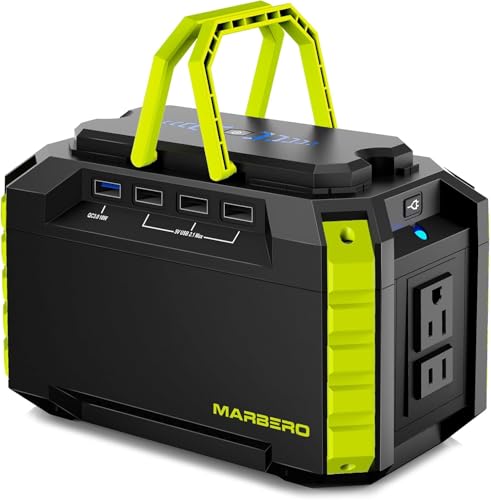
Pros
- 150Wh capacity
- 2.9-pound weight
- Four USB and four DC ports
- Built-in steady and SOS lights
- Wall, car, and solar recharging
Cons
- Solar panel not included
- 100W AC output limits appliance choices
- Actual runtime varies by device and use
Specifications
| Color | Green |
|---|---|
| Size | M270/100W/150WH |
| Dimensions | 7.25 x 4.31 x 4.66 inches |
| Weight | 2.9 Pounds |
| Product Group | Lawn & Patio |
Verify the current product variation before purchase; specifications may change.
Detailed Review
Key features from the product listing:
- 150Wh capacity supports small electronics and other low-power devices
- 100W AC output handles compatible devices, with 150W peak listed
- Four USB and four DC ports allow multiple device connections
- Built-in steady and SOS lighting adds campsite or outage lighting
- Recharge by wall outlet or 12V car adapter; solar input supported
- Compact 2.9-pound design is easier to carry than larger power stations
Best For / Avoid If
Best for buyers prioritizing
- 150Wh capacity
- 2.9-pound weight
- Four USB and four DC ports
Consider another option if
- Solar panel not included
- 100W AC output limits appliance choices
- Actual runtime varies by device and use

Pros
- 300W pure sine wave AC output
- Eight charging ports
- Three charging methods
- Compact 6.5-pound design
- 12-month limited service
Cons
- Solar panel sold separately
- 18W USB-C output
- 296Wh capacity limits high-draw runtime
Specifications
| Color | Black |
|---|---|
| Size | 300W |
| Dimensions | 9.1 x 5 x 7 inches |
| Product Group | Lawn & Patio |
Verify the current product variation before purchase; specifications may change.
Detailed Review
Key features from the product listing:
- Pure sine wave AC output supports sensitive electronics such as laptops
- 296Wh capacity provides portable backup power for short trips
- Eight output ports let users charge multiple devices simultaneously
- Regulated 12V and 24V DC outputs support compatible appliances
- Wall, car, or compatible solar-panel charging improves campsite flexibility
- Built-in protections help manage overcharging, overloads, short circuits, and temperature
Best For / Avoid If
Best for buyers prioritizing
- 300W pure sine wave AC output
- Eight charging ports
- Three charging methods
Consider another option if
- Solar panel sold separately
- 18W USB-C output
- 296Wh capacity limits high-draw runtime

Pros
- Five-pound portable design
- Nine mixed-format outlets
- 100W USB-C port
- Built-in flashlight and flasher
- Two-year limited warranty
Cons
- 200W continuous output limit
- AC power adapter not included
- Solar panel sold separately
Specifications
| Color | Grey |
|---|---|
| Size | 120 volts |
| Dimensions | 9.4 x 4.5 x 5.9 inches |
| Weight | 5 Pounds |
| Product Group | Lawn & Patio |
| Binding | Tools & Home Improvement |
Verify the current product variation before purchase; specifications may change.
Detailed Review
Key features from the product listing:
- Nine outlets let you charge several compatible devices at once, including through USB-C, USB-A, AC, and 12V DC.
- 183Wh capacity and 5-pound weight make it practical for car camping and travel.
- 200W running output supports small electronics; 400W peak output is for brief surges, not continuous use.
- Display shows battery level and charge time to help track power use.
- Built-in flashlight offers steady, tri-mode, and flasher functions for campsite use or emergencies.
- Overcharge, overload, overheating, and low-voltage protections help guard the unit during operation.
Best For / Avoid If
Best for buyers prioritizing
- Five-pound portable design
- Nine mixed-format outlets
- 100W USB-C port
Consider another option if
- 200W continuous output limit
- AC power adapter not included
- Solar panel sold separately
Buying Guide for Black Friday Portable Camping Power Station Deals
Battery capacity and realistic runtime
Capacity, measured in watt-hours, describes stored energy, not guaranteed runtime at every output. The listed models range from 150Wh to 296Wh, but inverter losses and device demand reduce usable energy.
For a rough estimate, divide watt-hours by a device’s watt draw, then allow for conversion losses and other loads. A 30W device drawing continuously from a 150Wh battery cannot be assumed to run five hours in real use.
Count each device’s expected hours, then add the energy needs together. If estimates leave little margin, choose greater capacity or reduce what you plan to power; do not rely on advertised phone-charge counts for every phone.
Output rating and appliance compatibility
Check running watts, surge or peak watts, and output type against each device label or manual. The MARBERO lists a 100W AC output with 150W peak, while EnginStar lists 300W AC output.
Westinghouse lists 200W running and 400W peak. Peak ratings do not mean a station can sustain that load, and motor-driven appliances may require startup power beyond their usual draw.
These are small battery units, not substitutes for a full-size generator or household backup system. Avoid connecting loads above the station’s stated limit, and follow device and station manuals for permitted use.
Ports and charging standards
Port count matters only when ports match your gear and can deliver the required power. EnginStar lists two AC outlets, regulated DC outputs, USB-A, and 18W USB-C; its stated AC rating is 300W.
Westinghouse lists two AC outlets, USB-A, three 30W USB-C ports, one 100W USB-C port, and a 12V DC port. MARBERO lists USB, DC, and one AC outlet, with its AC output limited to 100W continuous.
Confirm connector type, voltage, and charging rate before departure. A port that fits physically may not provide the voltage or power required by a laptop, camera, or other sensitive electronics.
Weight, size, and campsite transport
For car camping, a few extra pounds may be acceptable if capacity and port selection improve. EnginStar lists a weight of 6.5 pounds and dimensions of 9 by 5.5 by 7.5 inches, useful details when planning storage.
Product data available here does not give comparable weights for MARBERO and Westinghouse. Check current manufacturer documentation before choosing for strict carry limits, especially if you must move gear far from your vehicle.
Battery stations are generally more suitable for vehicle-based trips than backpacking. For a hike-in campsite, compare the complete packed load against your carrying capacity, not just the battery’s advertised energy.
Recharging options and time
All three product descriptions identify more than one charging route, but included equipment differs. MARBERO lists wall and car charging, plus solar input for a compatible panel sold separately; EnginStar also supports wall, car, and compatible solar charging.
EnginStar states a maximum charging speed of 65W and an 80% charge in two hours. Westinghouse states an 80% charge in two hours using a 100W AC adapter, but its description says that adapter is not included.
Solar charging depends on panel compatibility, sunlight, placement, and conditions. Check voltage and current requirements in the manuals before connecting a panel, and do not assume a panel is included.
Safety, care, and ownership
EnginStar’s published description claims ETL certification and lists battery-management protections. Verify certification details and model coverage with manufacturer documentation; a protection feature is not a guarantee against misuse or equipment failure.
MARBERO and EnginStar descriptions mention voltage, temperature, overload, or short-circuit protections. Westinghouse lists protections including overcharging, overloading, overheating, and low voltage, plus a two-year limited warranty.
Keep stations dry, ventilated, and within manufacturer operating limits. Recharge and store them as their manuals direct, inspect cables before use, and do not use a damaged battery or charger.
Why You Should Trust Us
We compare the published product specifications and manufacturer-described features, including capacity, output, ports, charging routes, weight where available, and warranty information. We separate those listed facts from our interpretation of which trip types they may suit.
Specifications alone cannot establish real-world runtime, long-term durability, or performance in every temperature. Confirm current manuals, compatibility, warranty terms, and certification details before relying on a station for essential equipment.
Final Thoughts
For the strongest listed capacity and AC output, EnginStar Portable Power Station 300W 296Wh Solar is our best overall fit for car campers with several modest loads. Its 296Wh capacity and 300W output stand out, but its 6.5-pound weight and separately purchased solar panel matter; who should skip it: backpackers prioritizing minimum carry weight.
MARBERO Portable Power Station 150Wh Camping Solar is a value-oriented choice for phones, lights, and devices under its 100W continuous AC limit. Its smaller capacity restricts longer or higher-draw use; who should skip it: campers needing sustained power beyond that rating or substantial reserve capacity.
Westinghouse iGen400s 400 Watt suits buyers who value varied USB-C ports, a display, and listed 200W running output. Its 183Wh capacity is lower than EnginStar’s, and a 100W AC adapter is not included; who should skip it: anyone needing higher stored energy or a complete fast-charging kit.
For heavier refrigeration or camera-battery plans, review our guide to higher-capacity power stations. Browse the Power and Lighting category for related campsite power and lighting advice.
FAQs
What can a 150Wh camping power station run?
It can support compatible low-draw electronics, but runtime depends on device wattage, output type, and conversion losses. Check the device label and station limits before connecting equipment.
Can these power stations run a CPAP machine overnight?
Product descriptions mention CPAP use, but runtime varies with machine settings, humidification, heated tubing, and power conversion. Check your CPAP manufacturer’s requirements and calculate demand; keep a suitable backup plan for essential equipment.
Can a portable power station run a mini fridge?
Compatibility depends on the refrigerator’s running and startup watts, plus required runtime. Compare those figures with both the station’s continuous output and usable capacity before relying on it.
Are solar panels included with these power stations?
The published descriptions say solar panels are not included for EnginStar and Westinghouse. MARBERO also describes its compatible solar panel as sold separately; check package details and input requirements before purchase.
Which output rating should I compare first?
Compare continuous output with the device’s operating draw, then check peak output for startup demands. Capacity comes next for estimating how long a compatible device may run.
Are portable power stations safe to use inside a tent?
Battery stations do not burn fuel during operation, unlike fuel-powered generators, but electrical and battery risks remain. Follow the manual, protect the unit from moisture, and keep vents clear; never operate fuel-burning generators in tents or enclosed spaces.
How should I store a camping power station between trips?
Follow the manufacturer’s instructions for charge level, temperature, and periodic recharging. EnginStar’s description recommends recharging every two to three months and advises against leaving the battery fully drained.
Which Black Friday portable camping power station deals fit backpacking?
These models are compact power options, but the supplied weight data only specifies EnginStar at 6.5 pounds. Compare verified packed weight and your energy needs against a lightweight battery bank before carrying a station on trail.
Where can I compare larger camping power options?
For refrigeration or extended off-grid use, compare models with more capacity and appropriate output in our fridge and camera battery power station guide. Confirm load requirements before choosing.