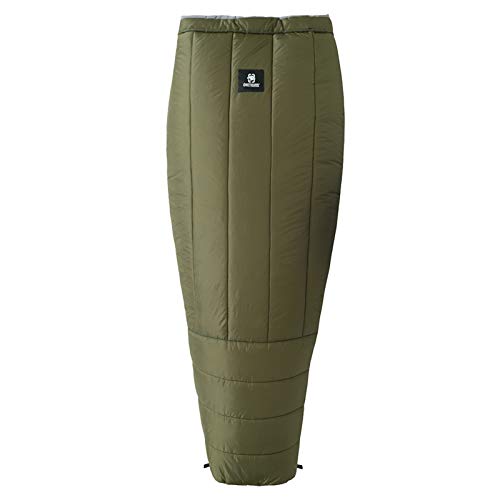

For backpacking, a lighter sleeping bag can reduce carried weight, but warmth, fit, and insulation matter more than a low number on a product listing. These options range from warm-weather bags to a heavier mummy style, so match the bag to expected nighttime lows and your sleep system.
This guide compares 5 options using published product details, with attention to stated temperature guidance, weight, dimensions, and practical trip fit. For broader sleep-system planning, see our Sleeping Systems gear guides.

Pros
- About 1.5 lb
- 79-inch length
- Compact claimed packed size
- Dual-side auto-lock zipper
- Machine-washable fill, per manufacturer
Cons
- Not suited to dependable cold-weather warmth
- 30-inch width may feel restrictive
- Listed fit recommendation under 165 lb
Specifications
| Color | 1.5lb-Haze Dark Grey |
|---|---|
| Size | 3-4 Seasons(50°F-77°F) |
| Dimensions | 79 x 30 x 3 inches |
| Weight | 0.66 Kilograms |
| Product Group | Outdoors |
Verify the current product variation before purchase; specifications may change.
Detailed Review
Key features from the product listing:
- About 1.5 lb, making it easier to carry on warm-weather trips.
- Packs to a claimed 7.9-inch size for compact storage.
- 79-inch length provides extra room for taller users; listed fit recommendation is under 165 lb.
- Dual-side zipper opens from inside or outside, with an auto-lock feature to reduce accidental opening.
- Reversible design and six listed color options offer simple customization.
- Manufacturer says whole-piece siliconized fiber fill is machine washable; follow care instructions to protect insulation.
Best For / Avoid If
Best for buyers prioritizing
- About 1.5 lb
- 79-inch length
- Compact claimed packed size
Consider another option if
- Not suited to dependable cold-weather warmth
- 30-inch width may feel restrictive
- Listed fit recommendation under 165 lb

Pros
- 50 to 80°F comfort range
- Adjustable hood with drawstring
- Two-way separating foot zipper
- 31.5 by 87-inch sleeping area
- Portable carry bag
Cons
- 3.3 pounds limits backpacking appeal
- No verified lower temperature rating
- Synthetic fill may pack bulky
Specifications
| Color | Black + Light Gray |
|---|---|
| Size | 3.3lbs, 50-80℉ |
| Dimensions | 86.61417314 x 31.49606296 x 2.99999999694 Inches |
| Weight | 3.30693393 pounds |
| Product Group | Outdoors |
Verify the current product variation before purchase; specifications may change.
Detailed Review
Key features from the product listing:
- 50 to 80°F comfort range suits spring, summer, and fall camping
- 31.5 by 87 inches accommodates many adult sleepers
- Adjustable hood helps retain warmth around head and neck
- Two-way bottom zipper allows ventilation and foot movement
- 190T polyester shell and lining support routine outdoor use
- Carry bag simplifies transport between vehicle and campsite
Best For / Avoid If
Best for buyers prioritizing
- 50 to 80°F comfort range
- Adjustable hood with drawstring
- Two-way separating foot zipper
Consider another option if
- 3.3 pounds limits backpacking appeal
- No verified lower temperature rating
- Synthetic fill may pack bulky

Pros
- Roomy 90.5 x 39.4-inch dimensions
- Two-way zipper with footbox ventilation
- Can unzip into a blanket
- Machine washable, per manufacturer
Cons
- Heavy at 7.05 pounds
- Temperature claims not independently verified
- Large packed size not provided
Specifications
| Color | Red |
|---|---|
| Size | 7.05lb(30-40℉) |
| Dimensions | 90.5 x 39.4 x 3 inches |
| Weight | 7.05 Pounds |
| Product Group | Outdoors |
| Binding | Sports |
Verify the current product variation before purchase; specifications may change.
Detailed Review
Key features from the product listing:
- Extra-wide 39.4-inch cut gives larger adults more room to shift positions.
- Listed 30-40°F comfort range targets cold-weather camping; treat temperature ratings as guidance, not a guarantee.
- Two-way zipper allows footbox ventilation without opening the full bag.
- Unzips flat for use as a blanket or ground layer.
- Polyester outer shell is described by the manufacturer as waterproof; use a groundsheet and keep the bag protected from prolonged wet conditions.
- Manufacturer describes the bag as machine washable; follow care instructions to protect insulation.
Best For / Avoid If
Best for buyers prioritizing
- Roomy 90.5 x 39.4-inch dimensions
- Two-way zipper with footbox ventilation
- Can unzip into a blanket
Consider another option if
- Heavy at 7.05 pounds
- Temperature claims not independently verified
- Large packed size not provided

Pros
- Under 3 pounds
- 50°F to 77°F rating
- Fits sleepers up to 6 feet
- Waterproof, wipe-clean outer shell
- Compression sack with straps included
Cons
- 50°F rating limits cold-weather use
- Synthetic fill heavier than down
- Marketed as cold weather despite warm rating
Specifications
| Color | Ocean Blue |
|---|---|
| Size | 31.5 x 86.6" Everyday 3 Season 50-80°F |
| Dimensions | 86.61417314 x 29.527559025 x 2.99999999694 inches |
| Weight | 2.866009406 Pounds |
| Product Group | Outdoors |
| Binding | Sports |
Verify the current product variation before purchase; specifications may change.
Detailed Review
Key features from the product listing:
- Rated 50°F to 77°F, covering warm spring, summer, and fall nights
- Weighs roughly 2.9 pounds, so it barely registers in a pack or trunk
- 86.6-inch length comfortably accommodates campers up to about 6 feet tall
- Double-layered waterproof shell with S-shape stitching sheds dew and drizzle
- 3D synthetic fill holds insulation value even in damp conditions
- Included compression sack with straps shrinks packed size and simplifies carrying
Best For / Avoid If
Best for buyers prioritizing
- Under 3 pounds
- 50°F to 77°F rating
- Fits sleepers up to 6 feet
Consider another option if
- 50°F rating limits cold-weather use
- Synthetic fill heavier than down
- Marketed as cold weather despite warm rating

Specifications
| Color | Green |
|---|---|
| Size | Standard |
| Dimensions | 87 x 32 x 3 inches |
| Weight | 2.9 Pounds |
| Product Group | Outdoors |
| Binding | Sports |
Verify the current product variation before purchase; specifications may change.
Buying Guide for the best lightweight sleeping bag
Start with realistic nighttime temperatures
Temperature claims are not automatically comparable. Product details may state comfort ranges, limits, or survival ratings, terms that describe different conditions and should not be treated as interchangeable.
The BORULL and MalloMe bags list ranges around 50°F to 77°F, while Sportneer gives a 50°F to 80°F comfort range. Those figures point toward mild-weather use, not dependable cold-weather protection.
TETON Sports describes its Trailhead as survival rated to 20°F and says its comfort rating is 20 to 30 degrees higher. That wording is a manufacturer claim, not a guarantee of comfort; plan around the stated comfort guidance and your own cold sensitivity.
Account for weight and packed volume
For backpacking, compare the full carried sleep system, not only the bag. The BORULL listing states 1.5 lb and a packed size of 7.9 inches, but does not specify packed dimensions in all directions.
MalloMe is listed at around 3 lb and includes a compression sack. TANSTRIDER weighs 7.05 lb, making it a poor fit for most weight-conscious hikes even though its size may suit roomy car-camping setups.
Pack space matters too. Ask whether the sleeping bag, pad, insulation layers, and food fit your pack together; compression can reduce volume, but it cannot make an oversized or heavy setup practical.
Choose shape and dimensions for your sleeping style
A mummy shape can reduce excess space around the body, while a rectangular cut gives more room to turn and stretch. TETON Sports uses a mummy design with a hood and vaulted footbox; TANSTRIDER is a notably wide rectangular option at 90.5 by 39.4 inches.
Length alone does not establish a comfortable fit. BORULL lists dimensions of 79 by 30 inches and recommends users under 165 lb, while Sportneer lists 31.5 by 87 inches. Compare shoulder room, hip room, and your usual sleep position before buying.
Consider fill, shell, and moisture management
The published details describe synthetic fills across these bags, including microfiber, polyester fill, and siliconized fiber. Synthetic insulation can suit damp camping better than down in some circumstances, but no insulation type removes the need to keep bedding dry.
Water-resistant or waterproof shell descriptions are manufacturer claims, not proof that a sleeping bag can withstand sustained rain or a wet tent floor. Use a groundsheet and shelter, ventilate condensation where practical, and store the bag dry between trips.
For pad selection, compare sleeping-bag fit with the self-inflating sleeping pad comfort guide. A sleeping bag does not replace a pad, which limits heat loss to cold ground.
Check zipper access and ventilation
A two-way zipper can let you vent the foot area without opening the whole bag. Sportneer specifies a separating zipper at the bottom, and TANSTRIDER describes a two-way zipper; BORULL lists access from either side and an auto-lock feature.
These details can make temperature adjustment and entry easier, but zipper construction and comfort remain difficult to infer from feature descriptions alone. For family camping, check that each user can operate the closure easily, especially when a child needs help during the night.
Match construction and care to ownership
Frequent use makes cleaning and storage relevant. BORULL and TANSTRIDER are described as machine washable, while MalloMe says its shell can be wiped clean and that the bag can be machine washed for heavier soil.
Follow the specific care label before washing; product copy alone does not establish cycle, detergent, or drying instructions. Store a sleeping bag loosely when possible rather than leaving insulation compressed for long periods, and inspect seams and zippers before trips.
Why You Should Trust Us
We assess these options from the published product specifications and descriptions, separating stated features from editorial conclusions about likely trip fit. Where temperature terminology or weather resistance is unclear, we avoid treating marketing language as a verified performance result.
Product information does not provide independent temperature testing, complete packed dimensions for every bag, or long-term durability evidence. Confirm current manufacturer guidance and care instructions before purchase, especially when planning trips near the limits of a bag’s stated range.
Final Thoughts
For a weight-focused warm-weather trip, BORULL stands out on the listed 1.5 lb figure and compactness claim, though its listed range is aimed at mild conditions and its fit recommendation is specific. Skip it if you need verified cold-weather performance or a roomy fit above the stated user guidance.
MalloMe is the value-oriented choice for casual summer camping: its listing gives a compression sack, around 3 lb weight, and a temperature range suited to mild nights. Its limitations are that the details do not establish a cold-weather rating, and the product copy’s broad seasonal language should not outweigh its stated range.
For backpackers expecting colder conditions, consider TETON Sports Trailhead, 20 Degree Sleeping Bag because it has a mummy hood, draft tube, and stated 20°F survival rating, with comfort guidance notably warmer. It is heavier and more restrictive in shape than a rectangular bag, and its rating should not be read as a comfort guarantee. Car campers who prioritize room over carry weight may prefer TANSTRIDER, while Sportneer offers generous listed length and a foot zipper. See our wide-pad camping quilt guide if you prefer a quilt-style sleep system.
FAQs
What makes a sleeping bag lightweight?
Weight depends on insulation, dimensions, shell materials, and construction. Compare stated bag weight with packed volume and warmth, since the lightest option may not fit your temperature or comfort needs.
Is a 50°F sleeping bag suitable for spring camping?
It may suit mild spring nights, but overnight temperatures vary by location, elevation, and weather. Check the forecast, use an appropriately rated pad, and bring suitable sleep clothing rather than relying on a single temperature figure.
Can I use a lightweight sleeping bag in winter?
Only if its credible comfort guidance matches expected conditions and the rest of your sleep system supports that use. The warm-weather ranges listed for several bags here do not make them suitable choices for freezing nights.
Does a sleeping bag keep me warm without a sleeping pad?
A bag alone provides limited insulation between your body and the ground. Choose a pad suited to expected temperatures, and review this self-inflating pad guide for adults if you want an alternative to an air mattress.
Are rectangular or mummy bags better for backpacking?
Mummy bags generally reduce unused space and may suit hikers prioritizing a compact sleep system. Rectangular bags allow more movement, but can be bulkier; comfort preference and trip temperatures should guide the choice.
What should I check in a sleeping bag temperature rating?
Check whether the listing gives a comfort rating, lower limit, or another manufacturer-defined figure. Treat vague labels cautiously, and leave a practical margin for cold sensitivity, damp conditions, and unexpected weather.
How should I store a synthetic sleeping bag?
Dry it fully according to its care label, then store it loosely in a cool, dry place when possible. Avoid prolonged compression, which can reduce insulation loft over time.
Which lightweight sleeping bag fits different camping trips?
For mild-weather backpacking, prioritize low listed weight and a packable design, such as BORULL’s stated specifications. For colder backpacking, evaluate TETON Sports’ mummy design and temperature guidance; for roomy car camping, consider the wider TANSTRIDER and accept its substantial listed weight.