

Solo campers need a tent that matches how they travel: a compact shelter for a backpack, a quick pitch for an overnight stop, or more protection for shoulder-season trips. This guide to 1-person tents compares 4 listed options using published dimensions, materials, setup details, and stated weather features.
Product details can help narrow a shortlist, but they do not establish performance in every storm or campsite. For group shelter needs, see our guide to backpacking tents with two side-entry doors.

Pros
- Fast clip-based setup
- Compact packed dimensions
- Taped waterproof seams
- Ventilated mesh openings
- Small vestibule for shoes
Cons
- Heavy for ultralight backpacking
- Fiberglass poles need careful handling
- Tight fit for two adults
Specifications
| Color | Army Green |
|---|---|
| Size | Tent-1 Person (7x3.8x3.8 ft) |
| Dimensions | 83 x 45 x 45 Inches |
| Weight | 4.40924524 pounds |
| Product Group | Outdoors |
| Binding | Sports |
Verify the current product variation before purchase; specifications may change.
Detailed Review
Key features from the product listing:
- Clip-on pole design supports faster setup than traditional pole sleeves
- One-person layout leaves room for sleeping gear and backpack storage
- PU 3000 waterproof fabrics and taped seams improve rain protection
- Mesh door and roof window support airflow while limiting insects
- Compact 16.5-by-4.7-by-4.7-inch packed size saves transport space
- Fiberglass poles, metal stakes, and guy lines support campsite stability
Best For / Avoid If
Best for buyers prioritizing
- Fast clip-based setup
- Compact packed dimensions
- Taped waterproof seams
Consider another option if
- Heavy for ultralight backpacking
- Fiberglass poles need careful handling
- Tight fit for two adults

Pros
- Fast pop-up setup
- Lightweight 3.3-pound design
- Roomy solo interior
- Taped seams and 2000mm coating
- Ventilated door and windows
Cons
- Folding requires practice
- Trekking poles excluded
- Limited space for two people
Specifications
| Color | Army Green |
|---|---|
| Size | 1 Person |
| Dimensions | 92.5 x 39 x 35.5 Inches |
| Weight | 3.3 Pounds |
| Product Group | Outdoors |
| Binding | Sports |
Verify the current product variation before purchase; specifications may change.
Detailed Review
Key features from the product listing:
- Opens in about three seconds for quick campsite setup
- 3.3-pound weight supports easier transport on short trips
- 7.7-foot interior fits one adult and gear storage
- 2000mm PU-coated polyester and taped seams help block rain
- Large door and two windows improve airflow
- Door converts into a small porch with trekking poles
Best For / Avoid If
Best for buyers prioritizing
- Fast pop-up setup
- Lightweight 3.3-pound design
- Roomy solo interior
Consider another option if
- Folding requires practice
- Trekking poles excluded
- Limited space for two people
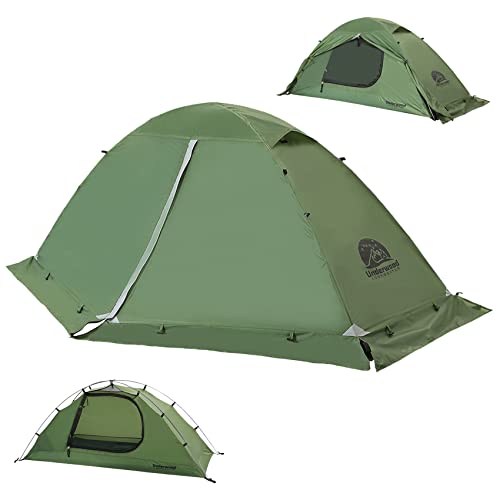
Pros
- Four-season design with snow skirt
- Full-coverage rain fly
- Freestanding aluminum-pole structure
- Compact packed dimensions
- Interior storage pocket and light hook
Cons
- Narrow floor limits sleeping-room flexibility
- Listed weight varies between four and 4.4 pounds
- Four-season performance remains a manufacturer claim
Specifications
| Color | Green |
|---|---|
| Size | 1 Person |
| Dimensions | 86.6 x 31.8 x 35.8 Inches |
| Weight | 4 pounds |
| Product Group | Outdoors |
Verify the current product variation before purchase; specifications may change.
Detailed Review
Key features from the product listing:
- Snow skirt helps limit snow entry during winter trips
- Full rain fly and PU5000mm coating support wet-weather protection
- Freestanding structure simplifies setup and campsite placement
- Aluminum poles balance low weight with structural strength
- Mesh panels, double-layer door, and rollable design improve ventilation
- Packed size of 5.1 by 15 inches saves storage space
Best For / Avoid If
Best for buyers prioritizing
- Four-season design with snow skirt
- Full-coverage rain fly
- Freestanding aluminum-pole structure
Consider another option if
- Narrow floor limits sleeping-room flexibility
- Listed weight varies between four and 4.4 pounds
- Four-season performance remains a manufacturer claim

Pros
- Compact packed size
- Covered fiberglass poles
- Mesh ventilation
- One-minute setup claim
- One-person gear storage
Cons
- Single-layer tent design
- Fiberglass poles less durable than aluminum
- Tight fit for two adults
Specifications
| Color | Army Green |
|---|---|
| Size | 1 Person (7.0*3.8*3.6ft) |
| Dimensions | 4.72 x 4.72 x 16.54 inches |
| Weight | 4.3431065614 pounds |
| Product Group | Outdoors |
| Binding | Sports |
Verify the current product variation before purchase; specifications may change.
Detailed Review
Key features from the product listing:
- 4.4-pound weight supports backpacking, biking, and motorcycle trips
- 7.0-by-3.8-foot interior fits one adult with gear
- Can accommodate one adult and one child
- Covered fiberglass poles help reduce hand contact during setup
- PU 3000mm polyester fabric provides rain resistance
- Mesh door and roof window improve airflow while limiting bugs
Best For / Avoid If
Best for buyers prioritizing
- Compact packed size
- Covered fiberglass poles
- Mesh ventilation
Consider another option if
- Single-layer tent design
- Fiberglass poles less durable than aluminum
- Tight fit for two adults
Match capacity to your sleep system
“One person” does not guarantee comfortable room for every camper and sleep setup. Compare the floor dimensions with your sleeping pad, bag, and the gear you want inside overnight.
The Night Cat Upgraded Backpacking Tents 1 2 Persons lists a 7 by 3.8-foot assembled size, while the pop-up model lists 7.7 by 3.3 feet. The first is wider on paper; the second is longer, but narrower.
Those figures do not show usable floor shape, wall slope, or the space taken by a pad. If you are tall, broad-shouldered, or carrying a large pack, check the tent’s complete dimensions and consider whether gear must stay outside.
Choose setup style for your trip
The Night Cat Pop-up Camping Tent is described as opening when thrown to the ground, with folding that requires repeated figure-eight motions. That may suit car camping or brief stops where fast deployment matters more than a small, shape-neutral pack.
The clip-setup Night Cat model attaches tent fabric to poles with clips, while the other Night Cat backpacking model uses diagonal pole sleeves. Sleeve-based pitching takes more manual threading, but buyers may prefer a conventional structure they already understand.
Setup claims come from published product descriptions, not independent timing. Practice any pitch and pack-down at home before a trip, especially when rain, darkness, or a late arrival could make mistakes harder to correct.
Weigh packed bulk against carrying comfort
Listed weights are 4.4 lb for the clip-setup tent, 4.4 lb for the four-season model, 1.5 kg for the pop-up tent, and 4.4 lb for the traditional Night Cat model. The pop-up description also gives a 21 by 21 by 2-inch package size.
Weight alone does not tell you how comfortably a tent fits a backpack. The pop-up’s broad, flat packed shape may be awkward to attach or carry, while the other Night Cat models list a narrower 16.5 by 4.7 by 4.7-inch package.
For frequent hiking, compare packed dimensions with your pack’s length and attachment points, and include stakes, guylines, and any footprint in the carried load. Car campers can usually accept more bulk if convenient setup matters more.
Interpret weather claims cautiously
The two Night Cat backpacking descriptions state PU 3000 mm coatings and taped seams. The pop-up model lists a PU 2000 mm coating, while the Underwood Aggregator model lists a PU 5000 mm coating and a full-cover rain fly.
These manufacturer-supplied coating figures are not a guarantee against leakage in every storm. Pitch quality, site drainage, wind direction, fabric condition, and ventilation all affect comfort; avoid low spots where runoff can collect.
The Underwood Aggregator tent includes a snow skirt described for winter use, but the published information does not establish a tested snow load or a universal four-season rating. Treat its all-season wording as a manufacturer claim, and choose shelter based on forecast, exposure, and your winter-camping skill.
Consider ventilation and condensation
Mesh doors and roof vents can support airflow, but ventilation depends on conditions and how the tent is pitched. Night Cat describes mesh doors and roof windows on its backpacking options, while the pop-up tent lists one door and two windows.
In humid weather or on a damp site, moisture can collect inside even when rain does not enter. Keep wet clothing away from bedding, use available vents, and avoid touching the inner wall with a sleeping bag.
The Underwood Aggregator model has a double-layer door and mesh design, according to its published description. That arrangement offers a way to balance bug protection and airflow, though the listing provides no independent condensation results.
Check poles, stakes, and repair options
The Night Cat backpacking models use fiberglass poles, and one describes a protective pole covering intended to reduce contact with splinters during setup. The Underwood Aggregator model lists aluminum poles. Pole material is one factor, not a complete measure of durability.
Before departure, inspect pole sections, seams, zippers, stakes, and guylines. Carry repair supplies appropriate to the tent, and learn whether a damaged pole can be temporarily splinted; the published descriptions do not specify replacement-part availability or warranty terms.
For windy sites, use all appropriate guylines and stakes, orient the shelter thoughtfully, and avoid exposed locations when conditions exceed your experience. Our windy-weather tent setup guide covers site and pitching considerations.
Why you should trust us
We compare the published product descriptions rather than treating marketing language as verified field performance. The decision points here focus on measurable listed details, including dimensions, packed size, weight, pole material, setup design, and stated fabric coatings.
Important evidence is missing: independent weather results, full warranty terms, replacement-part policies, and consistent measurement methods. We therefore separate product claims from practical interpretation and avoid declaring any option suitable for every season or storm.
Final thoughts
For a general solo-camping shortlist, the Night Cat Upgraded Backpacking Tents 1 2 Persons is our best overall fit on paper: its clip attachment, listed 7 by 3.8-foot floor, and stated PU 3000 mm coating balance useful features. Its 4.4 lb listed weight is substantial for a backpacker prioritizing low base weight. Who should skip it: hikers who need a lighter shelter.
The Night Cat Backpacking Tent for One 1 to 2 Persons is the value-oriented choice for buyers who want a conventional pole-sleeve pitch and the same listed weight and packed dimensions as the clip model. Its stated protective pole covering is a useful handling detail, but sleeve setup is less convenient than clips. Who should skip it: campers seeking the fastest pitch.
For quick car-camping setup, consider the Night Cat Pop-up Camping Tent, but account for its broad packed shape and practice folding before leaving home. For colder trips, the 1 Person 4 Season Backpacking Tent lists aluminum poles, a snow skirt, and a full-cover fly, yet its winter suitability remains a manufacturer claim, not a storm guarantee. Who should skip it: anyone needing verified severe-weather performance.
Compare your intended use with our instant-tent setup guide and browse the Tents and Shelters category for alternatives. Recheck current product specifications and warranty details before buying.
FAQs
What should I look for in 1-person tents?
Start with floor dimensions, packed shape, total carried weight, and the weather conditions you expect. Then compare setup style, ventilation, pole material, and the availability of repair parts.
Are these tents suitable for backpacking?
The listed weights are 4.4 lb for three models and 1.5 kg for the pop-up model. That may be acceptable for some short trips, but backpackers should assess packed shape and total shelter weight against their own load priorities.
Can a one-person tent fit a child too?
Some Night Cat descriptions say an adult and child can fit, but a shared tent will leave less room for sleeping gear and belongings. Check the floor dimensions and consider a larger shelter if comfort or extra gear space matters.
Does a higher waterproof coating rating guarantee a dry tent?
No. Coating figures are only one specification, and the published descriptions do not establish independent storm performance. Correct pitching, intact seams, drainage, and exposure also matter.
Is a four-season tent necessary for winter camping?
Not automatically. Match shelter design to expected wind, precipitation, snow, and campsite exposure, and verify limits with the manufacturer. A product label alone cannot establish safe performance in severe conditions.
Which tent is easiest to set up?
The pop-up model is described as opening rapidly, while the clip model is designed to attach fabric to poles without threading sleeves. Setup experience varies, so practice pitching and packing each design before relying on it outdoors.
How do I reduce condensation inside a solo tent?
Use available vents, choose a well-drained site, and keep damp clothing away from bedding. Condensation can still occur in humid or cold conditions, even when rain stays outside.
How should I prepare a tent for windy conditions?
Choose a sheltered site, secure appropriate stakes and guylines, and pitch according to the maker’s instructions. Review our guide to pitching a tent in strong wind, and relocate if conditions exceed your skill or gear limits.
What should I check before a first trip?
Confirm all components are present, inspect seams and poles, practice setup and pack-down, and verify the sleeping area fits your pad. Check warranty and replacement-part details because those are not provided in the listed product information.


