

Two vestibules can give tent partners separate entry points and a place to store packs outside the sleeping area. The best backpacking tent with two vestibules for your trips depends on more than door count: interior width, packed weight, weather details, and pitching style all affect comfort and use.
This guide compares 6 listed shelters using published specifications, not personal field claims. For a closer look at how vestibules help organize wet or dirty gear, see our guide to tent vestibule uses; check current product documentation before a trip.
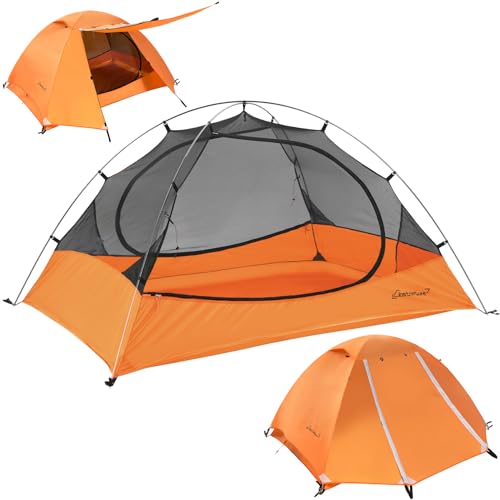
Pros
- Two doors and two vestibules
- PU 5000 waterproof coating
- Full mesh ventilation
- Aluminum poles and stakes
- Included pole repair kit
Cons
- 5.29-pound total weight
- Only 115 centimeters tall
- Limited sleeping space for two adults
Specifications
| Color | Orange |
|---|---|
| Size | 2 Person |
| Dimensions | 87 x 59 x 46 inches |
| Weight | 5.29 Pounds |
| Product Group | Outdoors |
| Binding | Sports |
Verify the current product variation before purchase; specifications may change.
Detailed Review
Key features from the product listing:
- PU 5000-coated fly and bathtub floor help manage wet conditions
- Two aluminum poles support freestanding setup
- Two D-shaped doors reduce entry congestion
- Two vestibules store shoes and packs outside sleeping space
- Full mesh interior improves airflow in warmer conditions
- 4.52-pound minimum trail weight limits pack burden

Pros
- PU 5000 waterproof coating
- Two doors and vestibules
- Aluminum poles included
- Compact 16.5-inch packed length
- One-year workmanship warranty
Cons
- 5.29 pounds is heavy for ultralight backpacking
- 115-centimeter peak height limits sitting room
- Small 2-person interior footprint
Specifications
| Color | Green |
|---|---|
| Size | 2 Person |
| Dimensions | 87 x 59 x 46 Inches |
| Weight | 5.29 Pounds |
| Product Group | Outdoors |
| Binding | Sports |
Verify the current product variation before purchase; specifications may change.
Detailed Review
Key features from the product listing:
- PU 5000-coated fly and bathtub floor improve wet-weather protection
- 5.29-pound total weight keeps backpack loads manageable
- 4.52-pound minimum trail weight reduces carried shelter weight
- Two doors and vestibules simplify entry and gear storage
- Full mesh interior supports airflow in warmer conditions
- Freestanding design enables one-person setup
Best For / Avoid If
Best for buyers prioritizing
- PU 5000 waterproof coating
- Two doors and vestibules
- Aluminum poles included
Consider another option if
- 5.29 pounds is heavy for ultralight backpacking
- 115-centimeter peak height limits sitting room
- Small 2-person interior footprint

Pros
- Two doors and two vestibules
- Stated 3000mm waterproof rating
- 7001-series aluminum poles
- Ventilation through mesh and ceiling vents
- Quick setup design
Cons
- 5.5 pounds limits ultralight backpacking use
- 43.3-inch peak height feels low
- Two-person floor may feel tight with gear
Specifications
| Color | 2P-Dark green |
|---|---|
| Size | 2 Person |
| Dimensions | 5.49999999439 x 5.49999999439 x 16.49999998317 inches |
| Weight | 5.51155655 pounds |
| Product Group | Outdoors |
| Binding | Sports |
Verify the current product variation before purchase; specifications may change.
Detailed Review
Key features from the product listing:
- Two doors and vestibules reduce entry friction and organize wet gear
- Full-coverage rainfly and welded floor help block rain and ground moisture
- 7001-series aluminum poles balance low weight with field practicality
- Mesh window and two ceiling vents support airflow and reduce condensation
- 88.6-by-53.1-inch floor fits two campers with compact gear
- Reflective guylines improve visibility and support windy-site setup
Best For / Avoid If
Best for buyers prioritizing
- Two doors and two vestibules
- Stated 3000mm waterproof rating
- 7001-series aluminum poles
Consider another option if
- 5.5 pounds limits ultralight backpacking use
- 43.3-inch peak height feels low
- Two-person floor may feel tight with gear
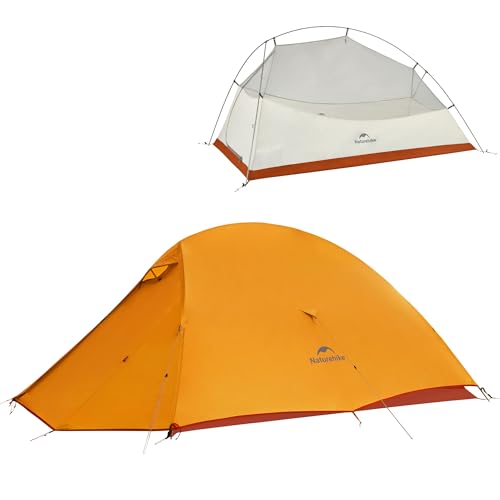
Pros
- 4.25-pound tent weight
- Included footprint
- Large front door
- PU3000mm waterproof coating
- 7001 aluminum poles
Cons
- Narrow 49.2-inch floor width
- 4.25 pounds before footprint
- Limited headroom for taller campers
Specifications
| Color | Orange |
|---|---|
| Size | 2 Person |
| Dimensions | 82.7 x 51.2 x 41.3 inches |
| Weight | 4.25 Pounds |
| Product Group | Sports |
| Binding | Sports |
Verify the current product variation before purchase; specifications may change.
Detailed Review
Key features from the product listing:
- 4.25-pound packed shelter supports backpacking, cycling, and bikepacking
- Included footprint adds ground protection without separate purchase
- Larger, higher door improves entry and gear access
- Front ventilation window helps reduce condensation buildup
- Double-layer design separates sleeping space from rain fly
- 82.7-by-49.2-inch floor fits two campers
Best For / Avoid If
Best for buyers prioritizing
- 4.25-pound tent weight
- Included footprint
- Large front door
Consider another option if
- Narrow 49.2-inch floor width
- 4.25 pounds before footprint
- Limited headroom for taller campers

Pros
- Lightweight 4.4-pound carry weight
- Dual doors and vestibules
- Aluminum poles
- Full mesh ventilation
- Quick solo setup
Cons
- 4.4 pounds is heavy for ultralight backpacking
- Limited 43.3-inch interior height
- Weather performance depends on correct pitching
Specifications
| Color | Army Green |
|---|---|
| Size | 82.6in x 55.1in x 43.3" |
| Dimensions | 43.30708657 x 55.11811018 x 86.61417314 inches |
| Weight | 4.4 pounds |
| Product Group | Outdoors |
| Binding | Sports |
Verify the current product variation before purchase; specifications may change.
Detailed Review
Key features from the product listing:
- 4.4-pound design keeps two-person backpacking loads manageable
- Two aluminum poles support quick solo setup
- Dual vestibules store boots and packs outside sleeping area
- Full-coverage rainfly and seam-taped construction improve wet-weather coverage
- 3000mm waterproof rating supports use during rainy trips
- Full mesh walls and ceiling vents help limit condensation

Pros
- Freestanding aluminum pole structure
- Simple color-coded setup system
- Protected vestibule storage
- Durable 68D polyester fabrics
- Compact packed dimensions
Cons
- Heavier than many ultralight two-person tents
- 44-inch peak height limits sitting room
- Tight 57-inch floor width for two adults
Specifications
| Color | BROWN |
|---|---|
| Size | 2-Person |
| Dimensions | 7.5 x 7.5 x 15 inches |
| Weight | 4.75 pounds |
| Product Group | Outdoors |
| Binding | Apparel |
Verify the current product variation before purchase; specifications may change.
Detailed Review
Key features from the product listing:
- Freestanding design lets you reposition shelter before final site selection
- Quick Corners and color-coded clips simplify setup after long hiking days
- 30-square-foot interior fits two campers for three-season trips
- EZ-Zip vestibule stores footwear and packs outside sleeping space
- Seam-taped construction helps limit moisture entry during changing weather
- 16 x 7 x 7-inch packed size fits organized backpacking loads
Confirm vestibule count and door layout
Two vestibules are useful when partners want independent access or need separate covered storage for boots and packs. The published descriptions explicitly list two doors and two vestibules for both Clostnature entries, Forceatt, and Night Cat.
Naturehike and Kelty listings describe a front door or vestibule, but do not establish two vestibules. If that feature is essential, verify the exact model configuration in its current manual or manufacturer listing rather than assuming similar names share a layout.
Match floor dimensions to two sleepers
Listed interior dimensions vary: Clostnature gives 7 feet 3 inches by 4 feet 11 inches, while Forceatt lists 88.6 by 53.1 inches. Night Cat describes an interior of 6.8 by 4.6 feet, and Naturehike lists 82.7 by 49.2 inches.
Kelty reports a 30-square-foot floor measuring 85 by 57 inches. These numbers do not tell you how tapered floor shape, sleeping pads, or shoulder room feel, so compare dimensions with your pads and sleeping positions; two-person capacity does not guarantee roomy comfort.
Compare complete packed weight, not just minimum weight
Clostnature lists 5.29 pounds total and 4.52 pounds minimum trail weight, a meaningful distinction when deciding what goes in your pack. Forceatt lists 5.5 pounds, Naturehike 4.25 pounds without its footprint, and Kelty 4 pounds 7 ounces packed.
Night Cat’s published details do not state weight, so its trail burden remains unclear from this information. Check whether listed weights include stakes, footprint, repair items, and stuff sack; accessories carried separately still count toward your actual load.
Read weather specifications conservatively
Clostnature specifies PU 5000 coating for its fly and groundsheet, while Forceatt and Night Cat list waterproof ratings up to 3000 mm. Naturehike reports PU 3000 mm, taped seams, and a footprint; Kelty describes seam-taped construction and a three-season design.
These manufacturer-published details are not a promise of performance in every storm, campsite, or setup. Site selection, taut guylines, intact seams, and avoiding pooled water matter; do not treat a three-season shelter as suitable for snow or severe weather without explicit manufacturer guidance.
Consider ventilation and condensation
Mesh interiors and vents can support airflow, but condensation still depends on humidity, temperature, ground moisture, and ventilation choices. Forceatt lists a mesh window and two ceiling vents; Night Cat lists mesh walls and dual ceiling vents.
Naturehike describes a ventilation window above the door and a mesh inner tent, while Clostnature specifies mesh walls. Keep vents clear when conditions allow, and avoid blocking airflow with stored gear; ventilation helps manage moisture but cannot eliminate it in every environment.
Weigh setup, freestanding design, and repair support
Clostnature and Kelty list freestanding designs, which can make repositioning easier before staking, though guylines and stakes remain important in wind. Kelty adds color-coded attachments and Quick Corners; Clostnature includes an emergency pole repair kit and lists a one-year warranty for material and workmanship defects.
Forceatt and Night Cat state quick setup claims, but setup time can vary with site, weather, and practice. For any shelter, learn the pitch at home, inspect poles and zippers, and confirm warranty coverage and replacement-part availability before relying on it for remote trips.
Check packed size and included components
Clostnature lists a packed size of 16.5 by 5.9 by 5.9 inches; Naturehike lists 15.7 by 5.1 by 5.1 inches, excluding no stated component from that packed-size figure. Kelty reports 16 by 7 by 7 inches.
Naturehike includes a footprint, which can reduce the need to source one separately, but its stated weight excludes that item. Clostnature includes stakes, guylines, and a pole repair kit. Confirm exactly what arrives, and choose a footprint that fits without extending beyond the tent floor.
Why You Should Trust Us
We assess the published product details against practical backpacking priorities: verified layout claims, interior dimensions, stated weight, weather information, ventilation, included parts, and ownership considerations. Recommendations reflect those documented differences, not claims of personal use or independent performance measurements.
Some listings provide more detail than others, and two Clostnature entries share the same short name and nearly identical specifications. The listing information does not explain how those entries differ, so we do not assign them distinct advantages; confirm the exact version and current terms before purchase.
Final Thoughts
For a balanced choice when two vestibules are essential, Forceatt combines an explicitly listed dual-door layout with a 5.5-pound stated weight, aluminum poles, and two ceiling vents. Its listed floor is narrower than Kelty’s, and its weather rating should not be read as a guarantee in severe conditions.
Clostnature stands out as a value-oriented option on published features: two doors, two vestibules, stated packed dimensions, and an included pole repair kit. Its total weight is higher than the listed Naturehike and Kelty figures, and those figures do not all include identical components.
For hikers prioritizing lower stated weight, Naturehike lists 4.25 pounds without the included footprint, but its published description does not confirm two vestibules. Kelty offers a documented 30-square-foot floor and straightforward pitching features, yet its description identifies only one vestibule. Compare these tradeoffs with our backpacking tent guidance for solo hikers with a dog and the broader Tents and Shelters category.
FAQs
Why choose a backpacking tent with two vestibules?
Two vestibules can provide separate entry and covered gear storage for tent partners. They do not increase interior sleeping space, and stored gear should not obstruct exits or ventilation.
Which listed tents explicitly have two vestibules?
The published descriptions explicitly state two vestibules for Clostnature, Forceatt, and Night Cat. Naturehike and Kelty descriptions mention a vestibule or front-door layout without confirming two.
Is a two-person tent comfortable for two adults?
Capacity labels alone do not establish comfort. Compare floor width and length with both sleepers’ pads, then account for tapered corners, clothing, and the space needed to move.
What tent weight should backpackers compare?
Compare packed weight when evaluating the complete carried shelter, and check what it includes. Minimum trail weight can omit items you still need, such as stakes or a footprint.
Does a 3000 mm waterproof rating mean a tent cannot leak?
No. A listed rating describes a material specification, not guaranteed shelter performance in every storm or pitch. Seam condition, setup, site drainage, and exposure also affect wet-weather use.
Can a three-season backpacking tent be used in winter?
Three-season labeling does not establish suitability for snow, high winds, or severe cold. Check manufacturer guidance for the expected conditions, and choose a shelter designed for the specific exposure when needed.
How can I reduce condensation inside a tent?
Use available vents, keep mesh airflow paths clear, and avoid camping beside standing water when practical. Condensation varies with weather and site conditions, so ventilation may reduce moisture without preventing it entirely.
What should I do before the first backpacking trip?
Practice pitching at home, inspect seams, poles, zippers, and guylines, and confirm all included parts. Review our practical explanation of vestibule storage to plan where wet footwear and packs will go.


