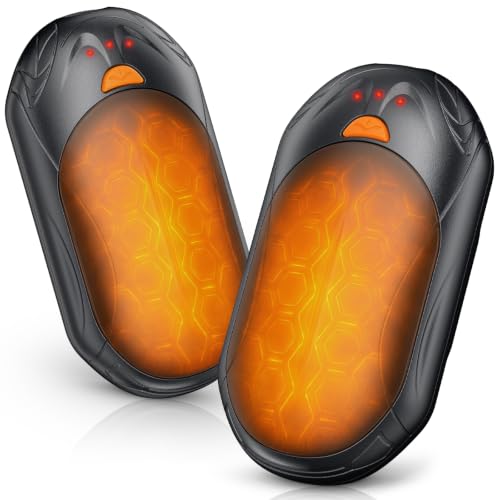

A portable diesel heater can make a parked vehicle or well-ventilated shelter more comfortable in cold weather, but it is not a set-and-forget safety device. The right choice depends on where you will use it, how you will power it, and whether you can route exhaust outdoors.
This shortlist includes all-in-one units with different tank sizes, control options, and stated altitude capabilities. Pair a heater with an appropriate cold-weather sleep system, such as the options in our winter camping sleeping bag guide, rather than treating powered heat as your only cold-weather plan.
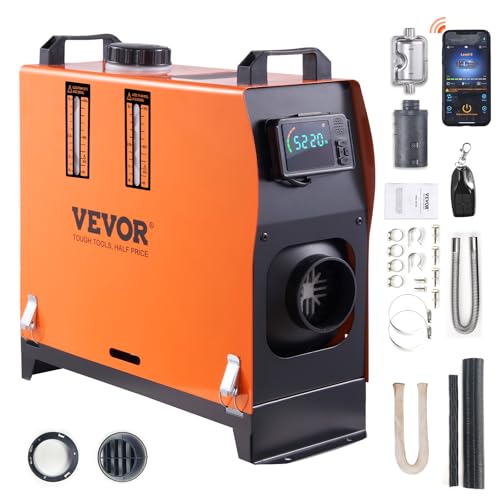
Pros
- Bluetooth app, remote, and LCD control
- Automatic altitude compensation
- Adjustable 46.4°F to 96.8°F range
- 5-liter fuel tank
- Overheating protection
Cons
- Requires safe exhaust routing and ventilation
- Runtime varies with fuel consumption and conditions
- Skip it for unvented indoor heating
Specifications
| Color | Orange- 8KW |
|---|---|
| Size | Upgrade - APP Control - 8KW |
| Dimensions | 15 x 5.9 x 16.1 inches |
| Product Group | Automotive Parts and Accessories |
| Binding | Automotive |
Verify the current product variation before purchase; specifications may change.
Detailed Review
Key features from the product listing:
- Bluetooth app control allows preheating from up to 98 feet away, according to the manufacturer.
- Remote control and LCD provide alternatives when phone control is inconvenient.
- Automatic altitude compensation is specified for elevations up to 18,045 feet.
- Adjustable temperature range of 46.4°F to 96.8°F supports different comfort preferences.
- Manufacturer lists fuel consumption of 0.16 to 0.62 liters per hour and a 5-liter tank.
- Overheating protection and timer functions add operating controls, but do not replace safe exhaust setup.
Best For / Avoid If
Best for buyers prioritizing
- Bluetooth app, remote, and LCD control
- Automatic altitude compensation
- Adjustable 46.4°F to 96.8°F range
Consider another option if
- Requires safe exhaust routing and ventilation
- Runtime varies with fuel consumption and conditions
- Skip it for unvented indoor heating
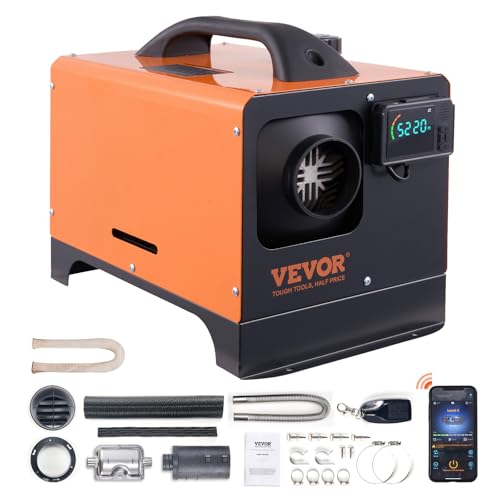
Pros
- Three control options
- Automatic altitude compensation
- 5 L fuel tank
- Adjustable temperature range
- Overheating protection specified
Cons
- Fuel use and runtime vary
- Diesel exhaust requires outdoor routing
- Skip it if you need silent or fuel-free heat
Specifications
| Color | Orange |
|---|---|
| Size | Upgrade - APP Control |
| Dimensions | 15.7 x 9.8 x 12.2 inches |
| Weight | 22.487150724 pounds |
| Product Group | Automotive Parts and Accessories |
| Binding | Automotive |
Verify the current product variation before purchase; specifications may change.
Detailed Review
Key features from the product listing:
- The 5 L fuel tank and stated 0.16–0.62 L/h consumption support extended heating between refills, though actual runtime depends on operating conditions.
- App control offers preheating from up to 98 ft away, with a separate remote and LCD as alternatives.
- Automatic altitude compensation is specified for elevations up to 18,045 ft.
- Temperature adjustment from 46.4°F to 96.8°F helps match heating to changing conditions.
- The 12V all-in-one format is described for use in vehicles, RVs, boats, and outdoor settings.
- Timing, overheating protection, and constant-temperature control add useful operating controls; these features do not replace safe exhaust setup.
Best For / Avoid If
Best for buyers prioritizing
- Three control options
- Automatic altitude compensation
- 5 L fuel tank
Consider another option if
- Fuel use and runtime vary
- Diesel exhaust requires outdoor routing
- Skip it if you need silent or fuel-free heat

Specifications
| Color | Black |
|---|---|
| Product Group | Automotive Parts and Accessories |
Verify the current product variation before purchase; specifications may change.

Specifications
| Weight | 28 pounds |
|---|---|
| Product Group | Automotive Parts and Accessories |
Verify the current product variation before purchase; specifications may change.

Pros
- Bluetooth, remote, and LCD controls
- Automatic altitude adjustment
- Adjustable 46°F to 96.8°F range
- 2.6-gallon fuel tank
Cons
- Requires careful exhaust and fuel installation
- Fuel consumption varies from 0.16 to 0.62 L/h
- Who should skip it: buyers unable to install combustion heating safely
Specifications
| Color | Orange |
|---|---|
| Size | 8KW |
| Dimensions | 14.8 x 5.5 x 6.9 inches |
| Weight | 15.873282864 pounds |
| Product Group | Automotive Parts and Accessories |
| Binding | Personal Computers |
Verify the current product variation before purchase; specifications may change.
Detailed Review
Key features from the product listing:
- Bluetooth app control supports preheating from up to 98 feet away, according to the manufacturer
- Remote control and LCD offer alternatives to app operation
- Automatic altitude adjustment is specified for elevations up to 18,045 feet
- Temperature settings range from 46°F to 96.8°F
- A 2.6-gallon tank is specified for up to 16 hours of operation
- Overheating protection is listed at 270°C or higher
Best For / Avoid If
Best for buyers prioritizing
- Bluetooth, remote, and LCD controls
- Automatic altitude adjustment
- Adjustable 46°F to 96.8°F range
Consider another option if
- Requires careful exhaust and fuel installation
- Fuel consumption varies from 0.16 to 0.62 L/h
- Who should skip it: buyers unable to install combustion heating safely

Specifications
| Color | 8L White |
|---|---|
| Size | 8L |
| Dimensions | 17.72 x 15.75 x 13.78 inches |
| Product Group | Home |
Verify the current product variation before purchase; specifications may change.
How to Choose a best diesel heater
1. Match the heater to the shelter and installation
These listings describe portable, all-in-one heaters for vehicles, campers, garages, and similar spaces. That does not mean every unit is suitable for every tent or indoor arrangement. Check the manufacturer’s instructions for approved placement, clearances, ducting, and exhaust routing before purchase.
Combustion exhaust must be discharged outdoors, away from doors, windows, and air intakes. Carbon monoxide is an odorless, potentially fatal hazard. Use a suitable carbon monoxide alarm in occupied spaces, follow its instructions, and do not operate a heater in an enclosed area unless the manufacturer explicitly permits that setup.
2. Treat power compatibility as a first-order requirement
Several listings mention 12-volt operation, while the RDXTIK listing also specifies 24 volts and an included 110-to-240-volt transformer. Confirm the exact input requirements, startup draw, and connection method in the manual. A vehicle battery can be depleted by prolonged use, especially in cold conditions.
Do not assume that an adapter makes a unit suitable for any outlet or battery. Verify the power source and wiring are appropriate, protect connections from moisture, and avoid improvised wiring. For vehicle use, plan how the battery will be recharged without relying on the heater’s runtime claims.
3. Compare tank capacity with stated fuel consumption
The listed models include tanks from 5 to 10 liters, and their stated fuel consumption varies by model and operating setting. A larger tank may reduce refills, but it adds fuel to transport and does not establish how long a heater will run at the output you need.
Runtime claims are generally tied to low settings, so treat them as manufacturer estimates rather than a guaranteed overnight duration. Estimate fuel needs from the published consumption range, then allow for cold weather, higher output, and uncertainty. Store diesel securely and follow the heater’s refueling and spill-prevention instructions.
4. Read heat-output and coverage claims cautiously
Most listings describe these units as 8-kilowatt heaters, while one listing uses a 12-kilowatt label and also refers to 8-kilowatt output in its description. That inconsistency makes the headline rating a weak basis for choosing. Ask the manufacturer for clear documentation if output is decisive.
Advertised coverage areas are not a substitute for insulation, air leakage, ceiling height, or outside temperature. A drafty vehicle may need more heat than a compact, insulated space. Consider adjustable output and thermostat placement, and avoid directing hot air at bedding, clothing, or combustible materials.
5. Choose controls and altitude features for your routine
The VEVOR listings specify Bluetooth app control, a remote, and an LCD, with automatic altitude compensation claimed up to 18,045 feet. The Hcalory listing claims app, panel, and remote controls and altitude adjustment up to 16,400 feet. Those figures are manufacturer claims; confirm current documentation and operating limits for your route.
Remote control can be convenient when the heater is outside the living area, but wireless range and phone compatibility matter. A physical control is useful if a phone is unavailable or cold-weather battery life is poor. At elevation, use the model’s documented altitude mode and maintenance guidance rather than assuming automatic adjustment prevents every combustion issue.
6. Account for noise, maintenance, and service
Fuel pumps and airflow can be audible, including in nearby campsites. The Hcalory listing describes a noise-reduction pump and a self-cleaning cycle, but gives no independent evidence that either feature eliminates routine maintenance. Ask about replacement parts, warranty coverage, and support before depending on a unit for frequent trips.
Diesel heaters need proper shutdown and periodic care according to their manuals. Keep the intake and exhaust clear, inspect fuel connections, and address soot or unusual operation before another trip. In a shared campground, consider neighbors and local rules about noise, fuel storage, and generator-like equipment.
Why You Should Trust Us
We compare the listing information by practical factors: power input, tank capacity, control methods, stated fuel use, altitude claims, and intended setting. We distinguish manufacturer specifications from editorial judgment, and flag listing details that conflict or lack supporting documentation.
Specifications alone cannot confirm real-world heating performance, noise, durability, or safe installation. Before buying, check the current product manual, warranty terms, parts availability, and applicable vehicle or campground rules. We do not treat advertised protections as a replacement for correct exhaust routing and carbon monoxide precautions.
Final Thoughts
For a flexible feature set, the Hcalory TB MAX2 8KW Diesel Heater is the standout option in this group: its listing describes several control methods, a 7.9-liter tank, and an altitude mode. Its efficiency, runtime, and noise figures are manufacturer claims, and its higher feature count does not remove the need to verify service and safety details. Skip it if you prefer a simpler, lower-cost setup.
For a value-oriented choice, the VEVOR 8KW Diesel Heater with Bluetooth App Control combines app, remote, and LCD controls with a 5-liter tank and stated automatic altitude adjustment. The listed fuel-consumption range and up-to-eight-hour runtime warrant careful planning, and the 12-volt input limits power-source flexibility. Skip it if you need a larger stated tank or a documented multi-voltage setup.
For buyers prioritizing a larger listed tank, the VEVOR 8KW Diesel Heater, Parking Heater specifies 10 liters and up to 16 hours of operation, alongside app and remote controls. These are listing claims, not a promise of runtime under your conditions. Compare it with the winter backpacking sleeping bag when building a layered cold-weather plan, and skip this heater if its power requirements or installation instructions do not fit your vehicle.
FAQs
Can you use a diesel heater inside a tent?
Only use a heater in a configuration explicitly permitted by its manufacturer. Combustion exhaust must go outdoors, and a tent’s fabric, clearances, ventilation, and heater placement create additional risks. A carbon monoxide alarm is an important precaution, not permission to ignore the manual.
Does a diesel heater need a battery?
These models require electrical power for operation and controls. Check the specific unit’s voltage, startup draw, and recommended supply in its manual, then plan for battery capacity and recharging. Do not assume a vehicle battery can run a heater all night and still start the vehicle.
How much fuel does a portable diesel heater use?
Consumption depends on the model and setting. The listings provide ranges rather than one dependable figure for every condition, so estimate from the documented rate and carry a suitable reserve. Higher heat demand can use fuel faster than a minimum-setting runtime suggests.
Can these heaters operate at high altitude?
Several listings claim automatic altitude compensation, but their stated limits differ. Confirm the model’s manual and operating guidance for your elevation. Altitude features should not be treated as a guarantee against poor combustion or the need for maintenance.
Are diesel heaters safe to run overnight?
There is no blanket answer without knowing the heater, installation, and shelter. Follow the manufacturer’s operating instructions, route exhaust outside and away from openings, maintain clearances, and use a carbon monoxide alarm. Stop using the unit if it behaves abnormally.
Is a larger fuel tank always better?
A larger tank may mean fewer refills, but it increases the amount of fuel carried and does not guarantee longer runtime at higher output. Balance tank size with trip length, safe fuel storage, and the heater’s published consumption figures.
What should I check before buying a best diesel heater?
Confirm voltage, power draw, approved installation, exhaust routing, tank capacity, fuel consumption, controls, altitude guidance, warranty, and parts support. For winter trips, also review our merino wool camping sock guide as one part of a broader clothing and sleep system.
Can I use a vehicle diesel heater in a garage?
Do not assume a portable heater is approved for indoor garage use. Follow the model’s manual, ensure exhaust is safely discharged outdoors, and prevent exhaust from entering the building. Never operate combustion equipment in an enclosed space unless the manufacturer explicitly allows that use.