
We compared 4 camping lanterns in August 2026 to help you choose the right one for your needs. Whether you’re setting up a tent in the wilderness or preparing for an emergency, the right light can make all the difference in visibility and safety.
Check out our guide to the Power and Lighting category for more tips on outdoor gear.
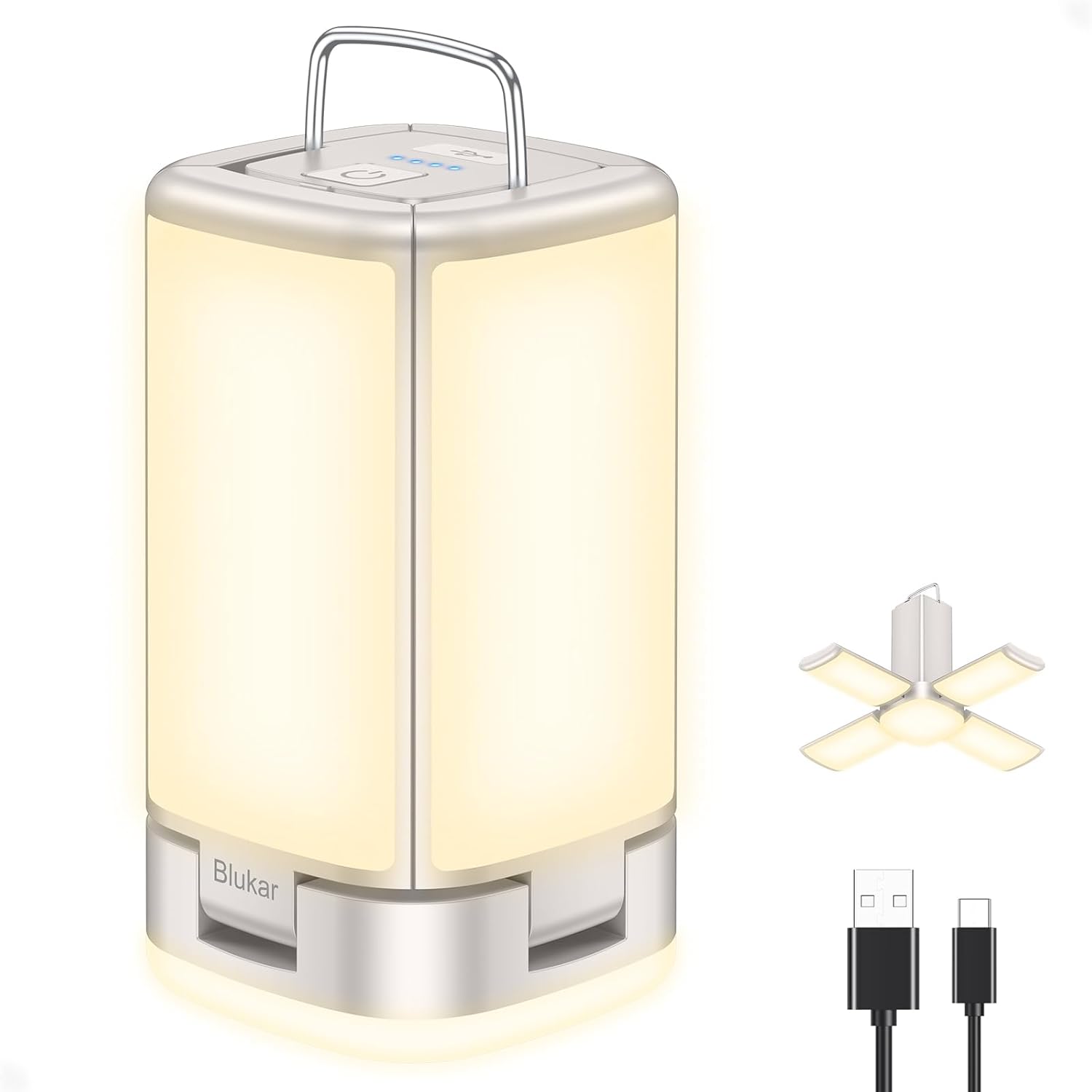
Pros
- 7 versatile light modes
- Rechargeable with long battery life
- Foldable for compact storage
- Warm 3000K light
- Hanging hook and buckle
Cons
- Not water-resistant
- No separate battery replacement
- Strobe mode may not suit all
Specifications
| Light Source Type | Light Emitting Diode (LED) |
|---|---|
| Power Source | Battery Powered |
| Battery Description | Lithium |
| Mounting Type | Ceiling Mount |
| Water Resistance Level | Not Water Resistant |
| Number of Batteries | 4 Lithium Ion batteries required. (included) |
| Voltage | 14.4 volts_of_direct_current |
| Light Source Special Features | Strobe |
| Beam Angle | 360 degrees |
| Number of Light Sources | 116 |
Verify the current product variation before purchase; specifications may change.
Detailed Review
What stands out in the currently available product data:
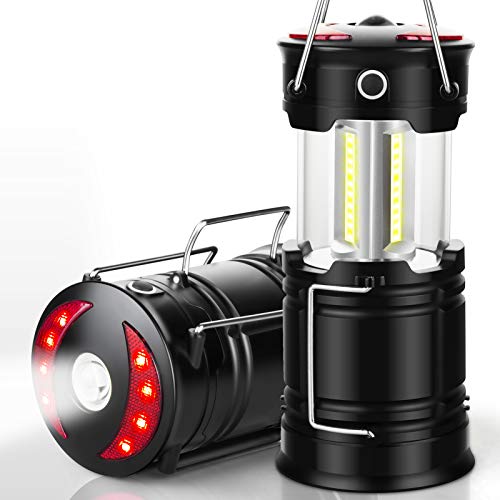
- 7 lighting modes including high side, low side, bottom, full, strobe, and red SOS, giving you precise control over brightness and beam pattern for any scenario
- Foldable design with 4 side panels that open 90 degrees, letting you switch from a focused lantern to a wide-area chandelier for tents or tables
- Built-in 4800mAh rechargeable battery runs 10 to 48 hours on a single USB-C charge, so you can leave the disposable batteries at home
- 360-degree beam from 116 warm-white LEDs provides stable, glare-free light that fills a tent or room without harsh shadows
- Climbing buckle and hook make it easy to hang from tent poles, tree branches, or a ceiling mount, keeping light exactly where you need it
- ABS construction is compact and lightweight at 13.9 ounces, fitting easily in a backpack without adding bulk
Best For / Avoid If
Best for buyers prioritizing
- 7 versatile light modes
- Rechargeable with long battery life
- Foldable for compact storage
Consider another option if
- Not water-resistant
- No separate battery replacement
- Strobe mode may not suit all

Pros
- Very bright 540-lumen output
- Waterproof and floats
- Long 295-hour runtime on low
- Multiple useful light modes
- Durable build with impact resistance
Cons
- Requires 3 D batteries (not included)
- Heavy at 1 lb 15 oz with batteries
- No USB or rechargeable option
Specifications
| Light Source Type | Light Emitting Diode (LED) |
|---|---|
| Power Source | Battery Powered |
| Battery Description | Alkaline |
| Light Output Maximum | 540 lumens |
| Mounting Type | Handlebar Mount |
| Water Resistance Level | Waterproof |
| Battery Life | 295 hours |
| Number of Batteries | 3 D batteries required. |
| Voltage | 3 volts |
| Wattage | 4 watts |
Verify the current product variation before purchase; specifications may change.
Detailed Review
What stands out in the currently available product data:
- 360-degree even illumination with 540 lumens on high
- IPX7 waterproof and floats for wet or marine use
- Multiple white modes (high, medium, low) plus red SOS
- 295-hour runtime on low for extended emergencies
- Compact 7.25-inch design with D-ring and hanging options
- Recessed power button with battery level indicator
Best For / Avoid If
Best for buyers prioritizing
- Very bright 540-lumen output
- Waterproof and floats
- Long 295-hour runtime on low
Consider another option if
- Requires 3 D batteries (not included)
- Heavy at 1 lb 15 oz with batteries
- No USB or rechargeable option

Pros
- Bright 350 lumens output
- Long 30-hour battery life
- Simple pull-to-use mechanism
- Durable and water-resistant build
- Compact collapsible design
Cons
- Requires 3 AA batteries each
- Plastic may feel less premium
- Low lumen for large spaces
Specifications
| Light Source Type | Light Emitting Diode (LED) |
|---|---|
| Power Source | Battery Powered |
| Battery Description | Powered by 3 AA batteries |
| Light Output Maximum | 350 lumens |
| Mounting Type | Tabletop Mount |
| Water Resistance Level | Water Resistant |
| Battery Life | 30 hours |
| Number of Batteries | 3 AA batteries required. |
| Voltage | 120 volts |
| Wattage | 5 watts |
Verify the current product variation before purchase; specifications may change.
Detailed Review
What stands out in the currently available product data:
- 360-degree COB LED light covers 97 sq. ft. for room-filling brightness
- Collapsible design with foldaway handle for easy storage and portability
- Pull-to-open operation turns on instantly; no switch needed in the dark
- Runs 30 hours on 3 AA batteries (not included) for extended use
- Water-resistant plastic body resists shock and weather for indoor/outdoor use
- Compact size fits in emergency kits, car, or backpack
Best For / Avoid If
Best for buyers prioritizing
- Bright 350 lumens output
- Long 30-hour battery life
- Simple pull-to-use mechanism
Consider another option if
- Requires 3 AA batteries each
- Plastic may feel less premium
- Low lumen for large spaces

Pros
- Long battery life up to 200 hours
- Three color temperatures for any scenario
- Compact and lightweight at 299 grams
- IP44 waterproof and dust resistant
- Easy-to-use buttons with memory function
Cons
- Plastic construction may feel less premium
- Super bright mode limited to 3 minutes
- No included wall adapter for charging
Specifications
| Light Source Type | Light Emitting Diode (LED) |
|---|---|
| Light Output Maximum | 1500 lumens |
| Mounting Type | Tabletop Mount |
| Water Resistance Level | Waterproof |
| Voltage | 4.4 volts |
| Wattage | 15.5 watts |
| Light Source Special Features | SOS strobe, Super bright mode |
| Beam Angle | 360 degrees |
| Number of Light Sources | 135 |
| Material Type | Plastic |
Verify the current product variation before purchase; specifications may change.
Detailed Review
What stands out in the currently available product data:
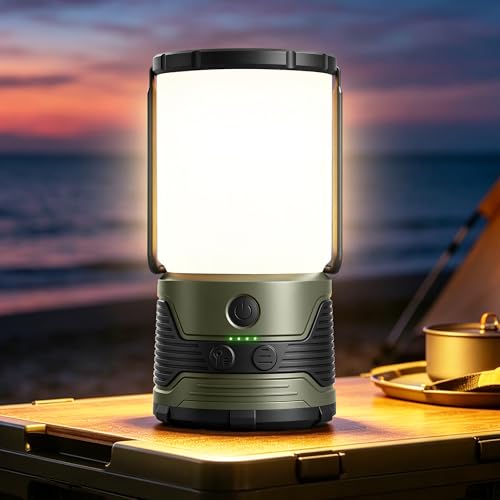
- 135 upgraded LEDs provide 360-degree, shadow-free illumination covering 200 square feet
- Three color modes (3000K warm, 4500K neutral, 6000K cool) adapt to fog, reading, or task lighting
- 5000mAh battery lasts up to 200 hours on low and recharges in 3.5 hours via USB-C
- Super bright 1500LM mode for 3 minutes and SOS red strobe for emergency visibility
- IP44 waterproof and dustproof rating with a matte, rubberized finish for rugged use
- Top handle and bottom hook allow hanging, carrying, or tabletop placement
Best For / Avoid If
Best for buyers prioritizing
- Long battery life up to 200 hours
- Three color temperatures for any scenario
- Compact and lightweight at 299 grams
Consider another option if
- Plastic construction may feel less premium
- Super bright mode limited to 3 minutes
- No included wall adapter for charging
Brightness and Lumens
Brightness determines how well you can see your surroundings during camping setup or nighttime activities. Higher lumens deliver wider coverage for larger groups or emergencies.
Many models provide even light distribution that reduces glare in tents. This feature proves useful when reading maps or preparing food after dark.
Choose based on activity type such as backpacking for focused beams or family camping for broad illumination.
Battery Life and Runtime
Runtime affects how long you can rely on the lantern without interruption. Longer lasting options suit multi-day trips where recharging is inconvenient.
Consider your group size and expected usage to match battery capacity to needs. Rechargeable models often balance runtime with convenience.
Factor in low mode runtime for setting up camp versus high mode for emergencies.
Lighting Modes and Versatility
Multiple modes allow adaptation to different situations like red SOS for signaling or warm light for cozy evenings. This flexibility enhances usability across scenarios.
Steady modes preserve night vision while strobe options aid visibility in fog. Select lanterns with modes suited to your climate and group size.
Check for features like dimmable brightness to control output precisely.
Portability and Weight
Lightweight construction helps you carry the lantern easily in a backpack or pack. Compact sizes minimize space taken in your tent or vehicle.
Look for ergonomic handles or hanging hooks for versatile placement. This design suits various camping styles from car camping to hiking.
Balance weight with capacity to avoid straining during long hikes.
Water Resistance and Durability
Waterproof ratings protect against rain and dew common in camping. Rugged materials resist impacts from setup or transport.
Features like floating designs add peace of mind near water. Consider IP ratings for your typical weather conditions.
Durability ensures long term reliability across seasons.
Power Source Options
Battery powered lanterns offer instant on without charging. Rechargeable ones provide convenience but require planning for outlets.
Compare built in batteries with removable ones for flexibility. This decision impacts value for frequent versus occasional users.
Factor in weight and replacement costs for your preference.
How We Researched These Products
We evaluate products based on published specifications and feature comparisons from reliable sources. Our analysis focuses on practical use cases without conducting independent tests.
This methodology keeps recommendations objective and aligned with field practical needs for US car campers and backpackers. Transparency about tradeoffs helps you make informed choices.
Related Camping Resources
See our camping gear reviews for related comparisons. You can also read our review methodology to understand how products are researched and evaluated.
Final Thoughts
The Streamlight 44931 Siege Compact Lantern, Coyote serves as our best overall pick for its powerful output and versatile hanging options. Streamlight 44931 Siege Compact Lantern, Coyote
The Blukar 116 LED Camping Lantern Rechargeable offers strong performance as our best value selection. Blukar 116 LED Camping Lantern Rechargeable
For specific use in emergencies the Lichamp LED Camping Lantern provides reliable multi pack lighting. Lichamp LED Camping Lantern
Explore our Power and Lighting category for more camping gear insights.
FAQs
What features make a camping lantern reliable for outdoor use?
Durability and weather resistance top the list for reliable performance. Look for rugged materials that withstand rain and impacts during setup.
Portability ensures easy transport without adding bulk to your pack. This combination suits various trip types from family outings to solo adventures.
Consider runtime to avoid interruptions on longer treks.
How do battery powered lanterns compare to rechargeable ones?
Battery models deliver immediate use without waiting for charge. Rechargeable options offer convenience but require planning around power sources.
Batteries suit remote camping where outlets are unavailable. Rechargeables excel for home base use with easy top ups.
Match your choice to group size and trip length for optimal results.
What should I consider for waterproofing in a camping lantern?
IP ratings indicate protection against water immersion. Higher ratings prove valuable near lakes or during storms.
Floating designs add versatility for marine or river camping. This feature reduces worry about accidental water exposure.
Check construction details to ensure long term seals remain intact.
Is a collapsible design useful for camping lanterns?
Collapsible models save space when packed but expand for use. This versatility fits small tents or larger setups effectively.
Handles allow hanging in various locations around camp. The design balances portability with functionality.
Suitable for car campers seeking minimal footprint.
How many modes are typically available in camping lanterns?
Seven modes including high low and strobe provide options for every situation. Red modes preserve night vision during sensitive activities.
Additional settings like SOS aid in emergencies or signaling. Select based on required versatility for your skill level.
More modes enhance adaptability across climates and group sizes.
What is the best brightness level for different camping activities?
300 lumens suffice for basic tent lighting while 500+ suit wide area needs. Choose higher for hiking to maintain visibility on trails.
Dim levels prevent over illumination in smaller spaces. This flexibility supports various trip types without waste.
Match brightness to your group and environment for efficiency.
Can camping lanterns be used as emergency lights at home?
Yes many models double as home emergency lights during outages. Portable designs allow quick deployment anywhere needed.
Built in batteries or rechargeable options ensure readiness. Safety features like low temperature operation add peace of mind.
Include in your preparedness kit for reliability.
How do I choose a lantern with long battery life?
Review runtime ratings for low and high modes. Rechargeable models with large capacities extend usability on weekends.
Consider weight of batteries for carry. This factor influences decisions for multi day trips.
Factor in recharging time to balance convenience with performance.
Are there options for hanging lanterns in tents?
Many lanterns include hooks and D rings for easy suspension. This placement illuminates corners effectively.
Adjustable designs suit different tent sizes and shapes. Versatile mounting enhances overall camp setup.
Ideal for backpackers needing minimal footprint.
What warranty should I look for in a camping lantern?
A one to two year warranty provides reassurance for durability. It covers manufacturing defects during normal use.
Look for certifications like IP ratings in the warranty details. This ensures confidence in long term reliability.
Match warranty length to your expected usage frequency.