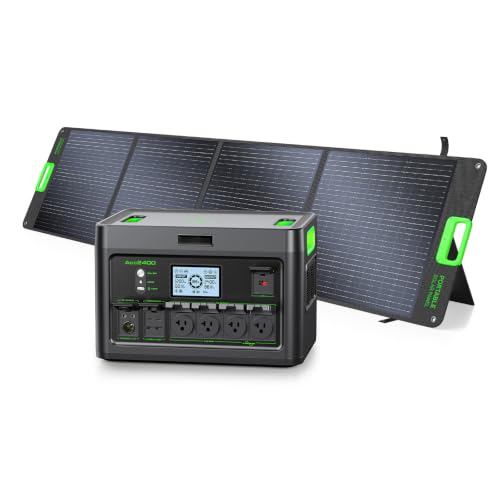

For a weekend car-camping charging station, compare usable battery capacity, port types, and how quickly you can recharge between trips. These top lifepo4 portable power stations for a weekend gear charging station include compact DC-focused and AC-equipped options, but listed capacities and outputs vary substantially.
The published product details describe four models, including one with 512Wh and 500W continuous output, while others offer 256Wh to 288Wh. Use those figures as manufacturer-provided specifications, not a promise of runtime. For solar planning, start with this guide to portable solar panels for camping and backup power.
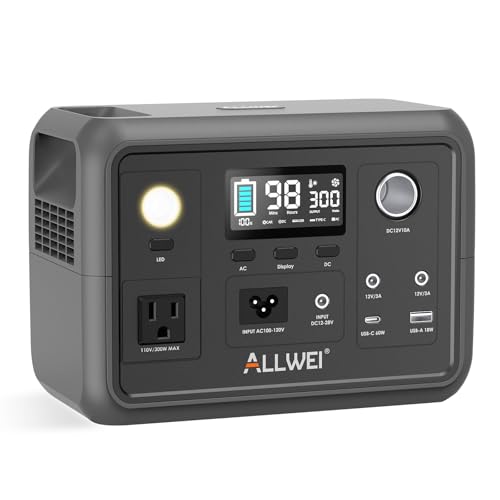
Pros
- LiFePO4 battery chemistry
- 6.4-pound portable design
- 60W USB-C output
- Multiple charging methods
- Pure sine wave AC output
Cons
- Only one AC outlet
- 256Wh capacity limits runtime
- Solar panel sold separately
Specifications
| Color | Black |
|---|---|
| Size | 9"L x 4.7"W x 7.8"H |
| Dimensions | 9 x 4.7 x 7.8 inches |
| Weight | 6.4 Pounds |
| Product Group | Lawn & Patio |
| Binding | Sports |
Verify the current product variation before purchase; specifications may change.
Detailed Review
Key features from the product listing:
- LiFePO4 battery supports up to 3,000 charge-discharge cycles
- 300W continuous output handles laptops, lights, and small devices
- 60W USB-C supports faster charging for compatible electronics
- Six output ports charge multiple devices simultaneously
- AC, car, solar, and dual charging support flexible recharging
- Built-in LED light includes three levels and SOS mode
Best For / Avoid If
Best for buyers prioritizing
- LiFePO4 battery chemistry
- 6.4-pound portable design
- 60W USB-C output
Consider another option if
- Only one AC outlet
- 256Wh capacity limits runtime
- Solar panel sold separately

Specifications
| Color | Dark Gray |
|---|---|
| Dimensions | 4.89 x 7.87 x 4.72 inches |
| Weight | 6.172943336 pounds |
| Product Group | Lawn & Patio |
| Binding | Electronics |
Verify the current product variation before purchase; specifications may change.
Pros
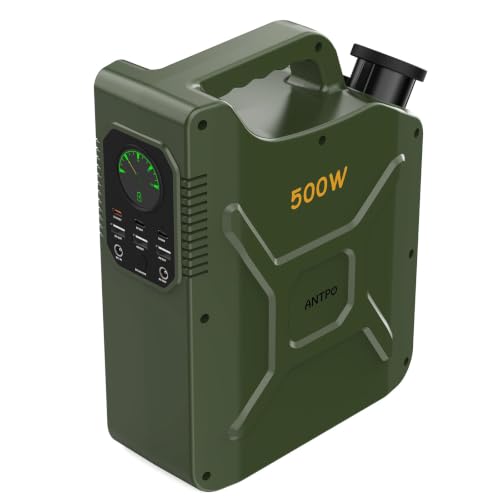
- 512Wh LiFePO4 battery
- 500W pure sine wave output
- Three recharge methods
- CPAP-compatible output claim
- Portable 13.2-pound design
Cons
- Limited for high-wattage appliances
- Solar recharge depends on panel conditions
- Runtime varies by device load
Specifications
| Dimensions | 6 x 5 x 5 inches |
|---|---|
| Product Group | Home Improvement |
Verify the current product variation before purchase; specifications may change.
Detailed Review
Key features from the product listing:
- 500W continuous output supports laptops, lights, chargers, and selected small appliances
- Pure sine wave AC power suits sensitive electronics and compatible CPAP equipment
- LiFePO4 battery chemistry supports longer cycle life than typical lithium-ion cells
- AC, solar, and 12V car charging support campsite and emergency use
- LCD shows battery level, output wattage, and estimated runtime
- 13.2-pound body and integrated handle simplify vehicle-based transport
Best For / Avoid If
Best for buyers prioritizing
- 512Wh LiFePO4 battery
- 500W pure sine wave output
- Three recharge methods
Consider another option if
- Limited for high-wattage appliances
- Solar recharge depends on panel conditions
- Runtime varies by device load
Pros
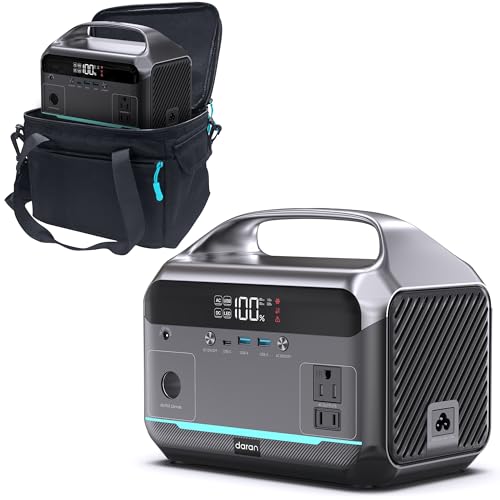
- 288Wh LiFePO4 battery
- 350W rated output
- 8.2-pound weight
- Wall, car, and solar charging options
- Built-in rear light with SOS mode
Cons
- 350W output limits appliance choices
- Solar panels and car charging cables sold separately
- Requires periodic charging during long-term storage
Specifications
| Color | Dark Grey |
|---|---|
| Dimensions | 10 x 6.6 x 8.2 Inches |
| Weight | 8.2 pounds |
| Product Group | Wireless |
Verify the current product variation before purchase; specifications may change.
Detailed Review
Key features from the product listing:
- 288Wh LiFePO4 battery provides portable power for short trips and limited backup needs.
- 350W rated output supports compatible devices within its power limit.
- Two AC outlets, USB-C, USB-A, and DC output allow multiple device connections.
- Recharge by wall outlet, 12V car port, or optional solar panel.
- 8.2-pound weight and compact dimensions ease transport and storage.
- LCD display and rear light with steady, strobe, and SOS modes add practical campsite features.
Best For / Avoid If
Best for buyers prioritizing
- 288Wh LiFePO4 battery
- 350W rated output
- 8.2-pound weight
Consider another option if
- 350W output limits appliance choices
- Solar panels and car charging cables sold separately
- Requires periodic charging during long-term storage
How to Choose top lifepo4 portable power stations for a weekend gear charging station
Estimate energy needs before choosing capacity
Battery capacity, measured in watt-hours (Wh), gives a useful starting point for comparing stations. Add the energy needs of devices you plan to charge, then allow margin for conversion losses, temperature, and charging behavior.
For example, a device drawing 10W for five hours uses about 50Wh, before losses. Actual runtime depends on the device, output port, operating conditions, and station efficiency, so treat estimates as planning tools rather than guarantees.
The published specifications list 256Wh for ALLWEI, 288Wh for Anker SOLIX and DARAN, and 512Wh for ANTPO. The larger ANTPO battery may suit a group carrying more camera, phone, or tablet charging, but the listing does not provide comparable real-world runtime results.
Match output and ports to your gear
Check both continuous output and connector type. A device must stay within the station’s rated output, and its cable or adapter must match an available port. AC outlets matter only when you need AC-powered equipment.
ALLWEI lists one AC outlet and a 300W continuous rating. DARAN lists two AC outlets and 350W rated output, while Anker SOLIX C300 DC lists USB and car ports, with no AC outlet specified in the listing information. That DC-only layout favors compatible electronics, not equipment requiring household AC.
ANTPO lists a 500W pure sine wave inverter and 500W continuous output. Treat manufacturer claims about device compatibility cautiously: confirm the connected device’s starting demand and charging requirements before relying on an inverter.
Choose a recharge method that fits your itinerary
Wall charging is practical before departure; car charging can help during a drive, while solar depends on panel compatibility, sunlight, placement, and the station’s input limits. Confirm which cables and panels are included, since several listed accessories are sold separately.
ALLWEI lists AC, car, solar, and combined AC-plus-solar charging, with manufacturer-stated recharge estimates. Anker SOLIX lists USB-C, car, and solar options, but its supplied compatibility notes exclude several named panels. Verify current compatibility before buying a panel.
For one-night camps near a vehicle, charging at home may be enough. Longer stays without driving require more careful energy budgeting; a panel can help replenish a station, but weather and shade make solar output variable.
Balance portability against stored energy
Weight and packed dimensions matter when you move equipment from the car to camp. The provided figures list ALLWEI at 6.4 lb and DARAN at 8.2 lb; ANTPO is listed at 13.2 lb. No weight is provided for Anker SOLIX in the published details.
More capacity can reduce the need to conserve power, but often means carrying more equipment. For car camping, a heavier unit may be manageable; for backpacking, these listings do not establish that any model suits a specific pack-weight target.
Understand LiFePO4 claims and ownership needs
All four listings identify LiFePO4 batteries. Manufacturers describe cycle-life figures and battery-management protections, but those claims do not establish how a unit will perform over a particular owner’s lifespan or in every condition.
Warranty terms also differ in the listing information: ALLWEI lists five years, Anker SOLIX three years, ANTPO 24 months, and DARAN one year. Review current warranty documentation, storage guidance, and support terms before purchase.
Plan for safe use and maintenance
Keep a power station dry, ventilated, and within the temperature limits in its manual. Do not cover cooling vents or use a damaged unit, wet connectors, or improvised wiring. The published details do not establish specific third-party safety certifications.
Follow each manufacturer’s charging and storage instructions. DARAN’s listing advises periodic charging during long-term storage; confirm the manual’s current guidance rather than treating a product-page tip as a universal battery rule.
Why You Should Trust Us
We compare the supplied capacities, rated outputs, ports, recharge methods, listed weights, and warranty terms. We separate published specifications and manufacturer claims from editorial interpretation, and avoid treating advertised runtime or cycle life as independently verified results.
Specifications can change, and the available product data leaves gaps, including some weights, input limits, and comparable runtime information. Check the current manual and product documentation for the exact model before purchase, especially when powering sensitive or higher-draw equipment.
Final Thoughts
For a general weekend charging hub, ALLWEI offers a balanced mix of 256Wh capacity, 300W continuous output, an AC outlet, several charging routes, and a listed 6.4 lb weight. Its lower capacity than ANTPO is a meaningful limit, and its solar panel is sold separately. Skip it if your planned load exceeds its output or needs more stored energy.
For a USB-first setup, Anker SOLIX C300 DC provides 288Wh and multiple USB-C ports, including two listed at 140W, but the supplied configuration has no AC outlet. It suits campers whose devices charge directly by USB; skip it if your gear requires household AC or your solar panel falls outside its compatibility guidance.
ANTPO stands out on paper for the largest listed capacity and 500W continuous AC output, making it the specific-use choice for campers with compatible higher-demand gear. Its listed 13.2 lb weight and unverified manufacturer performance claims temper that appeal. DARAN offers two AC outlets and a 350W rating, but its shorter listed warranty is a consideration. Pair your power plan with suitable USB-C charging lanterns, and browse more camping power and lighting gear.
FAQs
What capacity suits a weekend camp charging station?
It depends on the devices and how often you charge them. Add estimated watt-hours for planned use, then leave margin for conversion losses and changing conditions; do not assume battery capacity equals usable output.
Can these power stations charge a laptop?
Listings specify USB-C outputs, including 60W for ALLWEI and up to 140W ports for Anker SOLIX. Check your laptop’s required input and cable, and note that the supplied Anker model is listed as DC-only.
Can a portable power station run a mini fridge?
Only if its startup and running demands fit the station’s output, and the battery has enough energy for the intended duration. The listing information does not provide comparable fridge runtime; check appliance requirements and station limits.
Is a 300W power station enough for camping?
It can suit small electronics and compatible devices whose demand stays within the rating. It may not suit appliances with high startup draw or equipment needing more continuous power.
Are LiFePO4 stations suitable for long-term storage?
They can be stored if you follow the manufacturer’s instructions for charge level, temperature, and maintenance. Do not assume one storage schedule applies to every model; check its current manual.
Can solar panels recharge these models?
Product details list solar charging for all four, but panel compatibility, connectors, and input limits differ or are not fully specified. Confirm those details before purchasing a panel, and expect sunlight and shade to affect charging.
What should beginners skip when buying a power station?
Skip paying for AC outlets or high output if every planned device charges through USB and your energy budget is modest. Do not skip checking capacity, port compatibility, recharge method, and warranty terms.
What should I check before using one at camp?
Inspect the unit and cables, keep vents clear, protect it from moisture, and follow its manual. For lighting needs, compare camping headlamps for camp use rather than relying on a station’s built-in light alone.
Which option suits top lifepo4 portable power stations for a weekend gear charging station in 2026?
Choose by load and ports, not a universal ranking. ALLWEI balances portability and AC output, Anker SOLIX favors USB charging, and ANTPO lists the largest capacity, with greater listed weight.