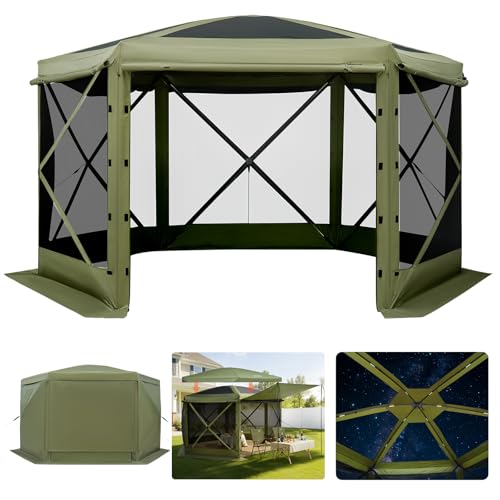
A screen tent can make a campsite more comfortable for meals, games, and time outside when biting insects are active. For the best screen tent under $300, compare usable seating space, canopy configuration, transport demands, and weather limits before prioritizing advertised capacity.
This guide considers three pop-up shelters from EAST OAK and VEVOR using supplied product details, not hands-on testing. If your trip needs an enclosed sleeping shelter instead, start with this guide to tents for windy beach conditions.

Pros
- 27-pound listed weight
- Pop-up setup without tools
- B3 mesh walls
- Six sunshades
- Carry bag included
Cons
- Listed dimensions conflict with 10×10-foot size
- No wind rating or waterproof test details
- Steel frame needs careful handling when folding
Specifications
| Color | Beige |
|---|---|
| Size | 10×10 FT |
| Dimensions | 72 x 72 x 86 Inches |
| Product Group | Lawn & Patio |
| Binding | Lawn & Patio |
Verify the current product variation before purchase; specifications may change.
Detailed Review
What stands out in the currently available product data:
- B3 mesh walls provide airflow while helping keep insects out, according to the listing.
- Six sunshades let users adjust coverage around the screened shelter.
- Pop-up frame is listed for setup in under a minute without tools.
- At 27 pounds, it is easier to transport in a vehicle than heavier steel shelters.
- Rainfly and UPF 50+ fabric are listed for rain and sun protection; no test details are provided.
- Carry bag supports storage and transport for car camping, beach trips, and patios.
Best For / Avoid If
Best for buyers prioritizing
- 27-pound listed weight
- Pop-up setup without tools
- B3 mesh walls
Consider another option if
- Listed dimensions conflict with 10×10-foot size
- No wind rating or waterproof test details
- Steel frame needs careful handling when folding

Pros
- Large footprint for group gatherings
- Removable canopy and convertible panels
- Mesh roof and walls
- Tool-free pop-up design
- Includes stakes and guy ropes
Cons
- 45.5-pound carry weight
- Not intended for storms or heavy rain
- 13 x 13-foot setup needs ample space
Specifications
| Color | Army Green |
|---|---|
| Size | 13x13ft |
| Dimensions | 153.543307 x 153.543307 x 129.92126 inches |
| Weight | 45.5 pounds |
| Product Group | Lawn & Patio |
| Binding | Lawn & Patio |
Verify the current product variation before purchase; specifications may change.
Detailed Review
What stands out in the currently available product data:
- 13 x 13-foot footprint gives families room to gather around camp furniture.
- Removable 300D Oxford canopy is listed with UV50+ protection and PU coating.
- Mesh roof provides airflow and an open view for stargazing.
- Convertible door panels can be set up as sunshades with included poles.
- Mesh walls and vented roll-up panels support airflow with added wind protection.
- Pop-up hub system is designed for tool-free, one-person setup.
Best For / Avoid If
Best for buyers prioritizing
- Large footprint for group gatherings
- Removable canopy and convertible panels
- Mesh roof and walls
Consider another option if
- 45.5-pound carry weight
- Not intended for storms or heavy rain
- 13 x 13-foot setup needs ample space

Pros
- 144 sq ft floor area
- Mesh roof for stargazing
- Two doors with awning conversion
- Removable UV50+ canopy
- Pop-up hub frame
Cons
- 43.3-pound listed weight
- Not designed for storms or heavy rain
- Seats six with chairs and table
Specifications
| Color | Beige |
|---|---|
| Size | 12x12ft |
| Dimensions | 141.73228 x 141.73228 x 129.92126 inches |
| Weight | 43.3 pounds |
| Product Group | Lawn & Patio |
| Binding | Lawn & Patio |
Verify the current product variation before purchase; specifications may change.
Detailed Review
What stands out in the currently available product data:
- 144 sq ft footprint gives groups space to gather under one shelter.
- Mesh walls and roof support airflow and clear-sky viewing when canopy is removed.
- Removable 300D Oxford canopy is listed with UV50+ protection and light-rain resistance.
- Two zippered doors provide entry from either side and can convert into sunshade awnings.
- Pop-up hub frame is claimed to set up in under two minutes without tools.
- Included stakes and guy ropes help anchor the dome on suitable ground.
Best For / Avoid If
Best for buyers prioritizing
- 144 sq ft floor area
- Mesh roof for stargazing
- Two doors with awning conversion
Consider another option if
- 43.3-pound listed weight
- Not designed for storms or heavy rain
- Seats six with chairs and table
Choose capacity by furniture, not standing headcount
Stated capacities can describe people standing or sitting closely, not a group using chairs, a table, and coolers. VEVOR says its 12-by-12-foot model seats six with chairs and a table, while its 13-by-13-foot model is described as seating six with furniture.
For meals or family downtime, plan around the number of seats and the gear that must stay inside. The larger VEVOR has more floor area on paper, but both listings describe similar seated capacity with furniture.
Match the footprint to your campsite
The EAST OAK shelter has a 10-by-10-foot footprint, while the VEVOR domes measure 12 by 12 and 13 by 13 feet. More floor area can help groups spread out, but it also requires a larger, relatively level site and room to manage guy lines.
Check campground site dimensions and nearby tree placement before choosing a larger shelter. Screen tents are gathering spaces, not substitutes for sleeping tents; a vestibule also serves a different purpose, as this tent vestibule guide explains.
Understand what the roof and walls protect against
The listings describe mesh walls for airflow and insect screening across these models. EAST OAK lists a rainfly, waterproof walls, and UPF 50+ protection; VEVOR lists removable Oxford canopies with UV50+ protection and PU-coated fabric described as suitable for rain.
Those descriptions are not equivalent to a verified storm rating or proof of performance in prolonged rain. VEVOR explicitly advises taking its shelters down during storms or heavy rain, so treat them as fair-weather gathering shelters and follow each model’s setup and care instructions.
Consider setup, folding, and transport together
All three products use pop-up systems, but setup claims differ: EAST OAK advertises setup in under a minute, and VEVOR describes its larger model as assembling in seconds. The 12-by-12-foot VEVOR listing claims one-person setup in under two minutes; these are manufacturer claims, not independent measurements.
EAST OAK lists a weight of 27 pounds, while the 12-by-12-foot VEVOR listing says under 40 pounds. The larger VEVOR models fold into a 3.9-foot carry bag, so check vehicle storage space and whether you can lift and carry the packed shelter comfortably.
Look closely at panels, doors, and ventilation
The VEVOR domes have mesh roofs, two zippered doors, and panels that can convert into awnings with included poles. Their mesh roof can support airflow and open-sky viewing when the canopy is removed, but an open roof is not a rain barrier.
EAST OAK describes mesh walls and six sunshades, along with vehicle-connect capability. Confirm exact configuration and compatibility before planning around those features, since supplied details do not explain how every attachment works or what additional setup it requires.
Plan for anchoring and changing weather
VEVOR includes stakes and guy ropes, and its listings emphasize anchoring. Use the supplied hardware as directed, select ground that accepts secure stakes, and avoid treating a wind-resistant design claim as a guarantee against gusts or frame damage.
EAST OAK warns users to grip the steel frame firmly while folding or unfolding because it may release suddenly. Keep hands clear of moving joints, secure the shelter before use, and take it down when conditions exceed the manufacturer’s guidance.
Weigh convenience against long-term ownership needs
Pop-up frames simplify setup but can be awkward to handle in tight campsites, and the supplied details do not establish repair-part availability or warranty coverage. Before buying, check the current manual, warranty terms, replacement-fabric options, and packing instructions.
Mesh can snag, zippers can collect grit, and wet fabric should be dried before storage to reduce mildew risk. Carry a small repair kit appropriate to the materials, and inspect seams, hubs, and tie-outs before trips rather than assuming a new shelter needs no checks.
Why You Should Trust Us
We compare the supplied product specifications and manufacturer descriptions, then focus on differences that affect campsite fit, setup, weather exposure, and transport. We do not claim physical testing, independently verified performance, or durability results that the available information does not support.
Capacity, setup speed, insect protection, and weather descriptions should be treated as manufacturer claims. Before purchase, confirm current instructions and included components, especially if your trip depends on a particular panel arrangement, vehicle connection, or rain configuration.
Final Thoughts
The East Oak 10×10 FT Pop Up Canopy Tent with Mesh is the most balanced choice for car campers who value lower listed weight and a smaller footprint. Its stated 27-pound weight, mesh walls, rainfly, and sun protection suit campsite meals and backyard use, but the listing does not establish storm performance.
The VEVOR 12x12ft Pop Up Gazebo Screen Tent is the value-oriented fit for buyers seeking a larger dome without choosing the biggest listed footprint. Its removable canopy, mesh roof, two doors, and awning conversion add flexibility; its under-40-pound weight claim and fair-weather limits still matter.
Choose the VEVOR Pop up Gazebo Screen Tent, 13 x 13 ft when extra floor area matters most for a car-camping group. It is the largest option here, but the added footprint and transport burden make it less suitable for small sites or buyers prioritizing a compact load. Browse other tents and shelters if you need a different shelter type.
FAQs
What is a screen tent used for while camping?
A screen tent creates a shared space for meals, seating, and relaxing while mesh walls allow airflow and help screen insects. It is not automatically a sleeping tent or a dependable shelter for severe weather.
Can these screen tents keep rain out?
The listings describe rain-related fabric or canopy features, but they do not establish performance in prolonged rain. VEVOR advises taking its shelters down in storms or heavy rain, so carry a separate plan for wet-weather protection.
Which option has the largest floor area?
The VEVOR 13-by-13-foot model has the largest stated footprint among these options. Actual comfort depends on furniture, entry clearance, and how much room your group needs to move around.
Are advertised person capacities realistic with chairs?
Capacity figures can refer to standing people or close seating. VEVOR describes both dome models as seating six with furniture, a more useful reference for groups planning to bring chairs and a table.
Can one person set up a pop-up screen tent?
VEVOR lists one-person setup claims for its pop-up models, and EAST OAK advertises a quick setup. Frame size, wind, ground conditions, and user familiarity can affect the process, so follow the model’s instructions rather than relying only on promotional timing.
Do screen tent mesh walls block every insect?
Product listings describe insect-screening mesh, but no supplied independent test verifies exclusion of every insect. Keep doors zipped, inspect seams, and avoid assuming mesh protects against insects that enter during setup or through gaps.
Is a mesh roof useful?
A mesh roof can increase airflow and provide an open-sky view when the removable canopy is off. It also leaves the shelter more exposed to rain and overhead debris, so use the canopy when conditions call for coverage.
How should a screen tent be secured at camp?
Use the included stakes and guy ropes as the manual directs, and choose ground that allows secure anchoring. Take the shelter down when weather exceeds its stated limits; no pop-up screen tent should be treated as guaranteed protection in severe conditions.
How does a screen tent differ from a sleeping tent?
A screen tent prioritizes shared space, ventilation, and insect screening, while a sleeping tent is designed around overnight shelter. If you are deciding what a vestibule adds to a sleeping tent, see this practical vestibule guide.