Quart capacity on a cooler means its stated volume: the amount of space it can hold, measured in quarts. One US liquid quart equals 4 cups, 2 pints, or 0.25 US gallon. A cooler rated for 50 quarts has a nominal capacity of 12.5 gallons, but that number does not tell you exactly how many drinks, food containers, or bags of ice will fit together.
For camping, treat quart capacity as a comparison measure, not a promise about your packing layout. Cooler walls, shape, lid contours, dividers, and the space taken up by ice all affect usable room. Check the manufacturer’s dimensions and capacity information, then estimate what your trip needs to keep cold.
What the capacity number does—and does not—tell you
A quart rating describes volume, not weight, cooling performance, or how long ice will last. Two coolers with the same stated capacity may have different shapes and interior dimensions. One may fit tall bottles more easily; another may have more usable floor space for food containers.
The rating also does not necessarily mean you can fill the cooler with that volume of groceries and still add ice. A 50-quart interior could theoretically hold 50 quarts of water, but camping loads include objects that leave gaps. Ice occupies room too, and a cooler packed for safe food storage needs enough cold source and sensible organization.
Convert quart capacity into a rough drink estimate
For a quick reference, a standard 12-fluid-ounce can holds 0.375 quart. Dividing a cooler’s stated quart capacity by 0.375 gives a theoretical maximum number of cans if the interior were filled only with cans and there were no gaps. For example, 48 quarts divided by 0.375 equals 128 cans in volume terms.
That figure is not a practical packing count. Cans do not fill a rectangular cooler without empty spaces, and you still need room for ice, food, or other items. Bottle size, packaging, and cooler shape change the result. Use the calculation only to compare capacities, then test your actual load at home if the fit matters.
Estimate cooler size for a camping trip
Start with the items you plan to chill, not a cooler size you saw advertised. Make a simple list of drinks, meals, and cold ingredients for each day. Include containers and packaging; unpacked food may take less room, but only use storage methods that keep food protected and identifiable.
- Count drinks: Note can or bottle size and how many each person may need.
- List food: Account for meal containers, sealed packages, and ingredients that must stay cold.
- Allow for ice: Ice or frozen cold packs take up space. The required amount depends on cooler design, starting temperature, weather, and how often the lid opens; follow the cooler and food-storage guidance that applies.
- Separate loads when useful: A dedicated drink cooler can reduce frequent opening of a food cooler, but adds bulk and carrying weight.
- Check transport limits: Consider loaded weight, vehicle space, campsite access, and who will lift or move the cooler.
For trip-specific comparisons, see guidance on cooler capacity for a five-day camping trip and cooler planning in hot weather. These topics illustrate why trip length and conditions matter alongside the quart number; they do not replace your own packing estimate.
Practical checks before choosing or packing
Compare interior dimensions when available, especially if you carry tall bottles, wide food containers, or a specific ice block. External dimensions matter for vehicle storage, but they do not reveal interior volume. If a manufacturer lists both capacity and dimensions, use each for its purpose: capacity for broad volume comparison, dimensions for checking whether particular items fit.
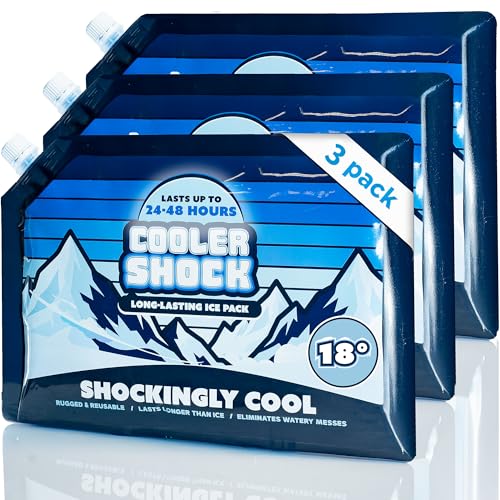
Before a trip, place your planned food and drinks beside the cooler. Check whether containers fit through the opening and whether the lid closes without force. Do not rely on compressing packages or leaving the lid partly open. If using reusable ice packs, check their shape and freezing instructions, as their volume and cold performance vary.
For food safety, follow applicable government food-safety guidance and any instructions for the food or cooler. Keep perishable food cold, use a suitable thermometer when guidance calls for temperature checks, and avoid assuming that a quart rating predicts safe holding time. Ambient temperature, pre-chilling, ice quantity, drainage, and lid-opening frequency all affect conditions inside.
Optional supporting equipment: the cooler and refrigeration category includes examples such as the Igloo Hard Cooler | Polar & Party Bar Series. Its listed features include a threaded drain plug, reinforced swing-up handles, and dual snap-fit latches. Those details do not establish a particular usable capacity for every version in the series; check the exact model’s manufacturer specifications before comparing sizes.

Igloo Polar 120 Qt Hard Cooler with UV Protection
Pros
- Holds 188 cans
- Lightweight for a 120-quart cooler
- UV-inhibited lid resists sun damage
- Stain- and odor-resistant liner
- Threaded drain plug for hose hookup
Cons
- Lid feels light and less rigid
- Ice retention trails premium rotomolded coolers
- No wheels for this large size
Specifications
| Brand Name | Igloo |
|---|---|
| Included Components | Cooler |
| Recommended Uses For Product | Camping |
| Model Name | Polar-Igloo |
| Team Name | Igloo |
| League Name | NCAA |
| UPC | 034223445775 |
| Number of Items | 1 |
| Global Trade Identification Number | 00034223445775 |
| Unit Count | 1 Count |
Verify the current product variation before purchase; specifications may change.
Detailed Review
What stands out in the currently available product data:
- UV-inhibited lid resists sun damage and helps prevent the plastic from becoming brittle after long days outdoors.
- Stain- and odor-resistant liner wipes clean easily, so fish, marinades, or spilled drinks don't leave a lasting smell.
- Threaded drain plug connects to a standard garden hose for quick, controlled draining and cleanup.
- Reinforced swing-up handles with tie-down loops make it easier to lift, carry, and strap down in a truck or boat.
- Dual snap-fit latches secure the lid, and the snap-lock child safety latch adds peace of mind around kids.
- Lightweight construction for a 120-quart cooler, so you can move it when full without needing a second person.
Best For / Avoid If
Best for buyers prioritizing
- Holds 188 cans
- Lightweight for a 120-quart cooler
- UV-inhibited lid resists sun damage
Consider another option if
- Lid feels light and less rigid
- Ice retention trails premium rotomolded coolers
- No wheels for this large size
Common mistakes when reading quart ratings
- Assuming the rating equals food space: The stated volume does not subtract space for ice or account for irregular packages.
- Comparing quarts with can counts as if they match: A theoretical volume conversion ignores gaps, container shape, and cold-source space.
- Confusing US quarts with other units: Cooler listings commonly use US capacity measures, but verify the listed unit if specifications come from another market. One US quart is about 0.946 liters.
- Choosing only by capacity: Weight, dimensions, insulation design, handles, drainage, and transport needs also matter.
- Assuming larger means better: An oversized cooler may take more vehicle space and be harder to move. Empty space can also make packing and organizing less convenient.
Limits of quart capacity as a comparison
Capacity labels are useful for narrowing choices, but they may not describe the same measurement method across every brand or model. Some listings provide internal dimensions or an approximate can count; others give only a quart figure. Treat those numbers as manufacturer-stated specifications, and consult the exact model manual or product information for measurement details.
Capacity cannot predict cooling duration. Ice retention varies with construction, starting conditions, sun exposure, ambient temperature, contents, and use. For related size and cooling considerations, read about compact and budget cooler options, while checking each model’s own dimensions and instructions.
FAQs
How many gallons is one quart?
One US liquid quart equals one-quarter of a US gallon. Divide the cooler’s quart rating by four to convert it to gallons. A 40-quart rating, for example, equals 10 gallons by volume.
How many cans fit in a 50-quart cooler?
A 12-fluid-ounce can has a volume of 0.375 quart, so 50 quarts divided by 0.375 gives about 133 cans as a theoretical volume-only maximum. Actual count will be lower because cans leave gaps and ice or food needs space.
Does a higher quart rating mean a cooler keeps ice longer?
No. Quart capacity measures stated volume, not ice-retention time. Cooler construction, conditions, contents, ice quantity, and opening frequency affect how long contents stay cold.
Should I buy a cooler with extra capacity?
Some extra room can help accommodate ice and awkwardly shaped items, but a much larger cooler adds bulk and may be harder to transport. Estimate your full load, check interior dimensions, and consider carrying weight before choosing.