Estimate camping fridge runtime by dividing the power station’s usable watt-hours by the fridge’s average power use in watts. For a practical estimate, use the fridge’s measured energy use over a full day, allow for power conversion losses, and keep a reserve. A fridge drawing 300 watt-hours per day from a 500Wh station will not necessarily run for 40 hours: usable capacity, inverter losses, heat, ventilation, and access all affect the result.
Use watt-hours, not just watts
Watt-hours (Wh) measure energy stored or consumed over time. Watts (W) measure power at a moment. A fridge may have a compressor rated for a certain number of watts, but its compressor cycles on and off. Multiplying its rated watts by 24 hours can substantially overstate daily energy use.
Find the power station’s capacity in Wh and the fridge’s energy consumption in Wh per day, if available. Check both devices’ manuals or labels. If the fridge lists only current in amps and voltage, watts can be estimated by multiplying volts by amps, but that describes power while the device draws that current—not its all-day energy use.
Estimate runtime in four steps
1. Find usable station capacity
Start with the station’s stated capacity in Wh. Then check the manual for usable capacity, output limits, and any guidance about powering AC devices. The full rated capacity may not reach the fridge: conversion losses occur when the station changes battery power to AC, and the station may reserve energy to protect its battery or shut down before it is fully depleted.
For a rough estimate when the manual does not give usable capacity, apply an efficiency factor. For example, using 85% of rated capacity is a planning assumption, not a guarantee or specification. A 500Wh station would then provide about 425Wh for the calculation. Actual usable energy varies by station, output type, temperature, battery condition, and load.
2. Get the fridge’s real daily energy use
Best estimate comes from measuring the fridge during conditions similar to your trip. Use a suitable energy meter or the station’s energy display, following both manufacturers’ instructions. Record Wh used over at least 24 hours; a longer period can better capture compressor cycling and changing ambient conditions. Measure with the fridge at your intended temperature and loaded as you expect to use it.
If you cannot measure it, look for the manufacturer’s daily energy figure and note its test conditions. Treat it as a starting point, not a promise for a hot campsite. If the label gives only average watts, multiply by 24 to estimate Wh per day. For example, an average 15W load uses 360Wh in 24 hours.
3. Calculate estimated hours
Use this formula:
Estimated runtime in hours = usable station Wh ÷ fridge average watts
To convert daily energy use into average watts, divide Wh per day by 24. For example, a fridge using 300Wh per day averages 12.5W. If a 500Wh station has an estimated 425Wh usable, 425 ÷ 12.5 gives about 34 hours. This is a rough calculation, not a guaranteed runtime. It assumes the fridge continues using energy at the measured average and the station has no other loads.
4. Plan a reserve and account for other devices
Do not plan to drain the station to its cutoff. Keep a reserve for unexpectedly high use, cold or hot conditions, aging batteries, and essential devices. A 20% reserve is a useful planning choice, but choose more if resupply is difficult or food safety depends on uninterrupted cooling. Subtract energy used by lights, phones, or other gear before estimating the fridge’s share.
Check the setup that changes real-world use
- Heat and sun: A warm environment can make the compressor run more often. Keep the fridge out of direct sun and follow its manual’s ventilation clearances.
- Set temperature: Colder settings can increase energy use. Set the temperature appropriate for the food and the fridge’s instructions.
- Loading and access: Pre-chill food when practical, keep the lid or door closed, and avoid repeatedly adding warm items.
- Power connection: Check whether the fridge is connected to AC or DC. AC operation can add inverter losses; DC may avoid that conversion, but compatibility and limits depend on both devices.
- Other loads: Include every device powered from the station. Check total output and surge limits in the station manual.
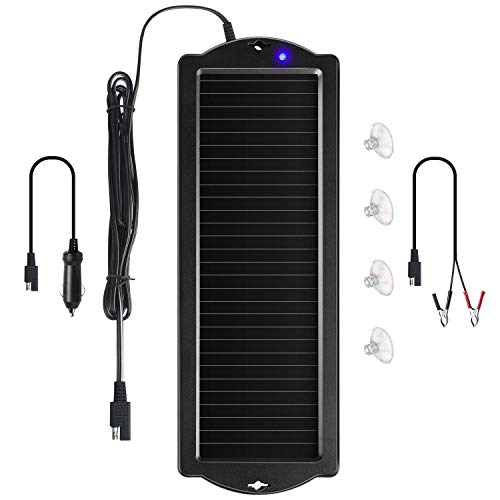
- Charging during use: Solar or vehicle charging can extend runtime, but actual input depends on conditions and equipment. Do not count on a panel’s rated output all day.
For trip planning, repeat the calculation using a higher daily-use figure than your best-case measurement. Track the station display during the first day, then update your estimate based on actual Wh consumed. A simple log of starting charge, elapsed time, fridge energy use, and weather can reveal whether your planned reserve is adequate.
Practical checks and common mistakes
Before leaving, fully charge the station as directed, confirm the fridge starts and runs from the selected output, and verify that cords and connectors fit the intended setup. Check the manuals for operating temperature ranges, ventilation, charging, and storage. Keep food at safe temperatures using applicable food-safety guidance; a power estimate alone cannot confirm food remains safe.
- Do not use compressor startup watts as though the fridge draws that amount continuously.
- Do not assume a station’s full rated Wh reaches an AC appliance.
- Do not confuse a fridge’s maximum watts with its average daily consumption.
- Do not ignore ambient heat, direct sun, poor airflow, or frequent opening.
- Do not treat a solar panel’s rated wattage as guaranteed charging energy.
Estimates have limits. Battery capacity changes with age and operating conditions, and a single test may not represent another campsite or season. The station may also shut down if its output limit is exceeded or its battery reaches a cutoff. For planning, use measured consumption, conservative assumptions, and the operating guidance supplied with your equipment.
Optional supporting equipment examples: compare power station capacity for camping and browse the coolers and refrigeration category. For other camp power needs, see Power and Lighting.

Pros
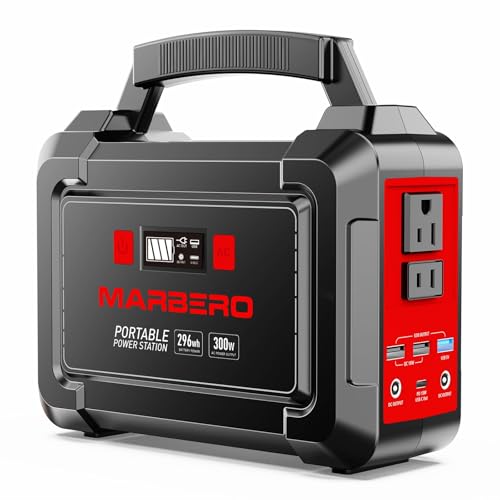
- 292Wh capacity
- 300W rated output
- 100W USB-C PD port
- LiFePO4 battery chemistry
- Solar charging support
Cons
- Solar panel sold separately
- Limited for high-wattage appliances
- Conflicting listed weight specifications
Detailed Review
What stands out in the currently available product data:
- 292Wh capacity supports phones, cameras, laptops, and small electronics
- 300W rated output handles common camping devices
- Two AC outlets support simultaneous plug-in charging
- 100W USB-C port charges compatible laptops and devices
- LiFePO4 battery chemistry offers claimed 4,000-plus charge cycles
- Solar charging reaches claimed 80% in 2.8 hours with 100W panel
Best For / Avoid If
Best for buyers prioritizing
- 292Wh capacity
- 300W rated output
- 100W USB-C PD port
Consider another option if
- Solar panel sold separately
- Limited for high-wattage appliances
- Conflicting listed weight specifications

Pros
- Dual-zone refrigeration and freezing
- SECOP compressor
- AC and DC power support
- Removable compartment partition
- Five-year compressor warranty
Cons
- 25.5-pound empty weight
- Limited 21-quart capacity
- Accessories receive one-year warranty
Specifications
| Color | Gray |
|---|---|
| Size | 20L |
| Dimensions | 22.4 x 12.6 x 12.4 inches |
| Weight | 25.5 pounds |
| Product Group | Automotive Parts and Accessories |
| Binding | Tools & Home Improvement |
Verify the current product variation before purchase; specifications may change.
Detailed Review
What stands out in the currently available product data:
- SECOP compressor cools quickly while limiting power use
- Dual-zone layout supports simultaneous refrigeration and freezing
- Removable partition converts compartments into one larger space
- Works from vehicle 12V/24V and household 100-240V power
- 0°F to 50°F range suits frozen and chilled food
- 2.5-meter vehicle cable supports flexible placement
Best For / Avoid If
Best for buyers prioritizing
- Dual-zone refrigeration and freezing
- SECOP compressor
- AC and DC power support
Consider another option if
- 25.5-pound empty weight
- Limited 21-quart capacity
- Accessories receive one-year warranty
FAQs
How do I estimate runtime if fridge lists only amps?
Multiply amps by operating voltage to estimate watts at that moment. That does not reveal daily energy use unless you also know how long the fridge draws that current. Measure Wh over a representative day, or use the manufacturer’s daily consumption figure if available.
Can I use the station’s full rated capacity in the formula?
Usually, do not assume every rated Wh is available to the fridge. Check the station manual for usable capacity and account for conversion losses, cutoff behavior, and other loads. If details are unavailable, use a conservative planning estimate and keep a reserve.
Will connecting a solar panel guarantee all-day fridge power?
No. Solar output varies with sunlight, shade, panel angle, weather, and charging limits. Compare expected charging input with measured daily fridge use, and plan for periods with little or no solar input. Follow the station and panel manuals for compatible connections and operating limits.
Why does my fridge run for less time than the estimate?
Common causes include hotter surroundings, direct sun, frequent opening, warm food, a colder setting, AC conversion losses, other station loads, and a battery with less usable capacity than assumed. Measure actual energy use and revise the estimate for the conditions you expect.